Location
Paphos, Cyprus
Dates
14-28 February 2026
Artists
Živilė Steniukynaitė-Fornari Helena Estrela
Shuang Xu
Curators
Christina Skarpari
Denise Araouzou
Host organisation
Xarxis
Coordinated by BJCEM – Biennale des Jeunes Créateurs de l’Europe et de la Méditerranée, and locally implemented by Xarkis, the residency brought together three European artists – Živilė Steniukynaitė-Fornari, Shuang Xu, Helena Estrela – and two curators – Christina Skarpari and Denise Araouzou – to explore the connections between art, climate change, and sustainable food production and consumption.
The 15-day residency was further enriched by the participation of artists Maiken Stæhr, Fede Fantini, Agata Szymanek, Miguel Teodoro, supported by the Department of Contemporary Culture of the Republic of Cyprus.
Artists’ Research and Community Engagement
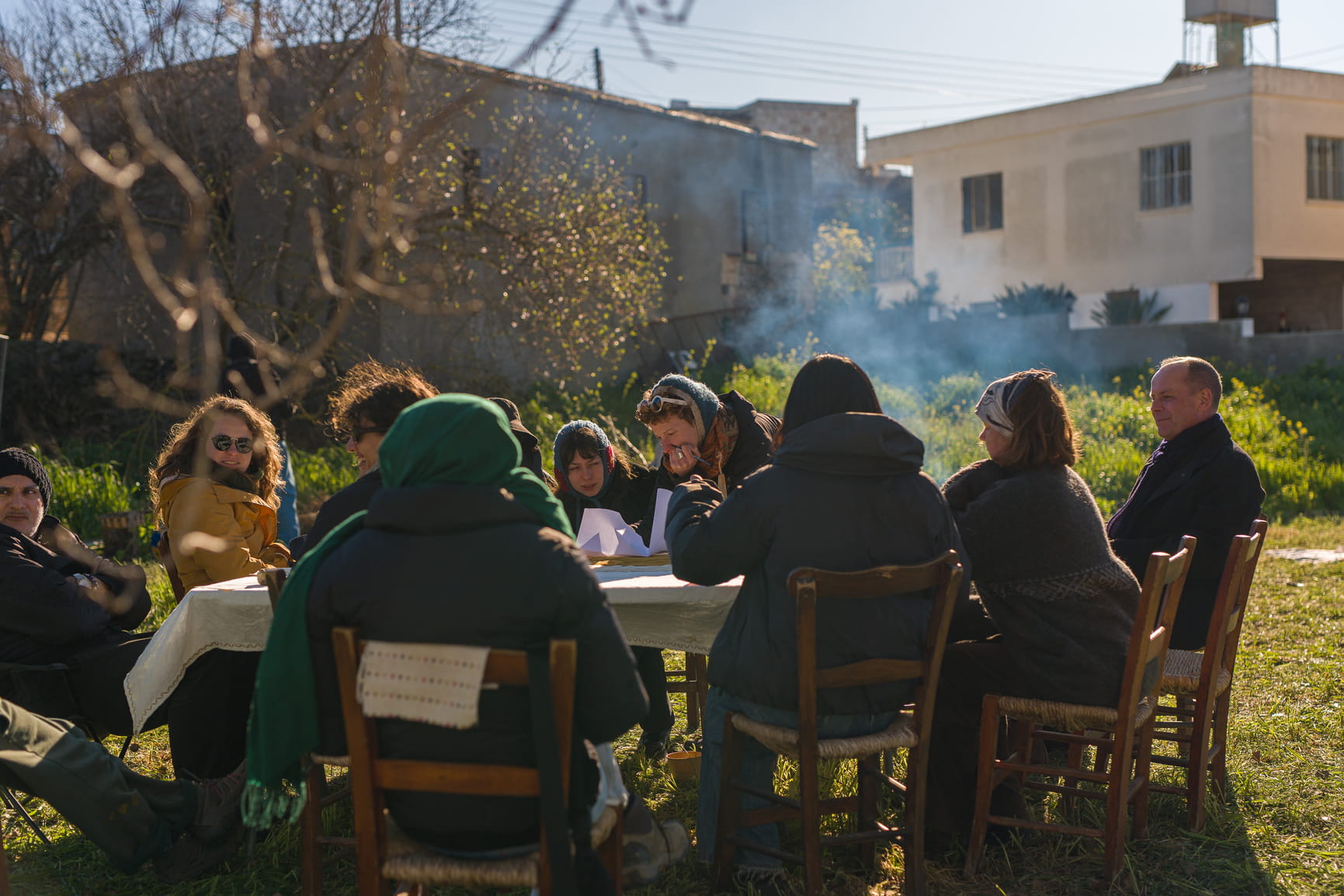
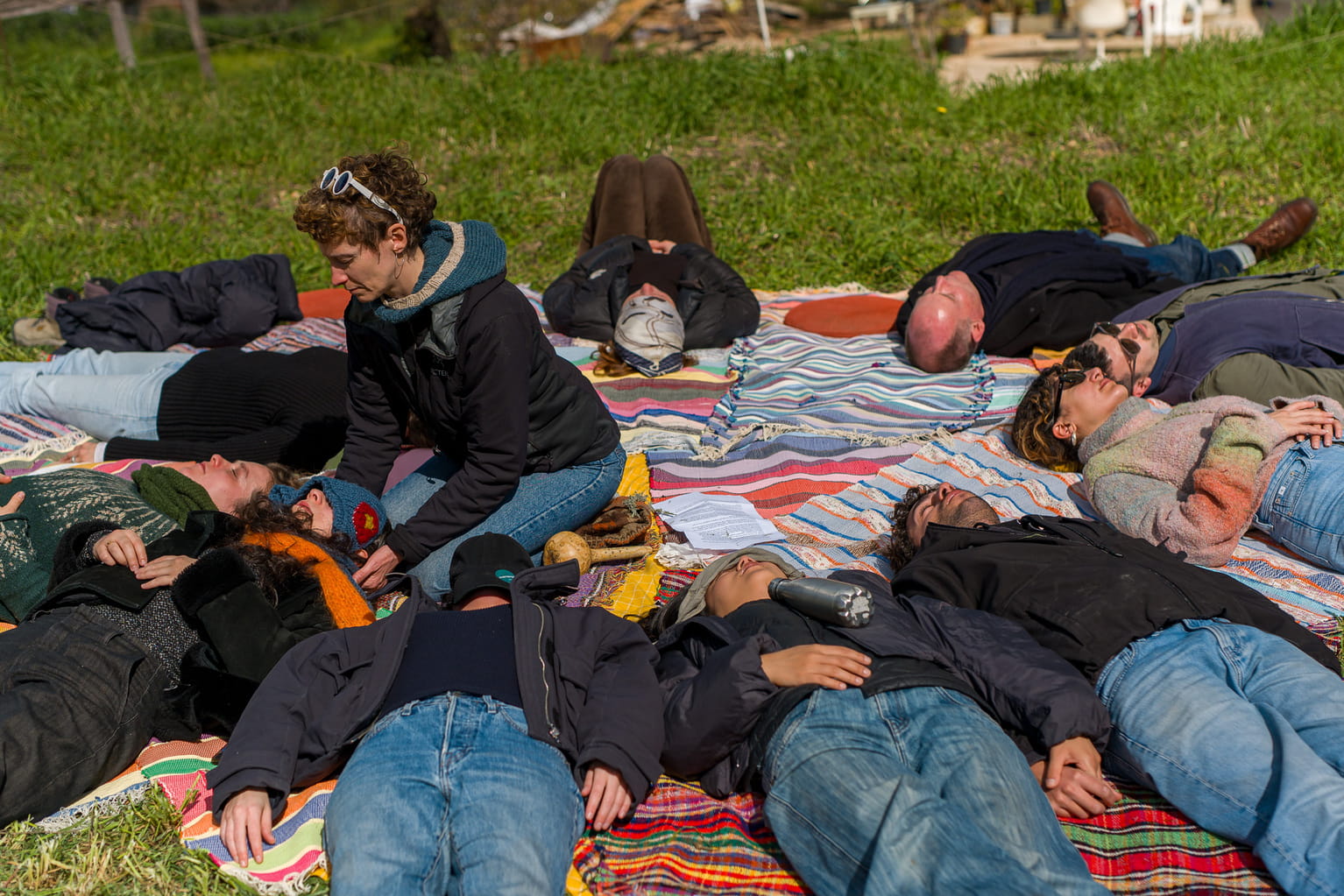
Throughout the residency, the artists explored the relationship between the territory and the local community through material practices, conversations with residents, nature and storytelling. Each project approached this relationship from a different perspective, using food as a starting point to investigate memory, belonging, environmental change, and shared knowledge.
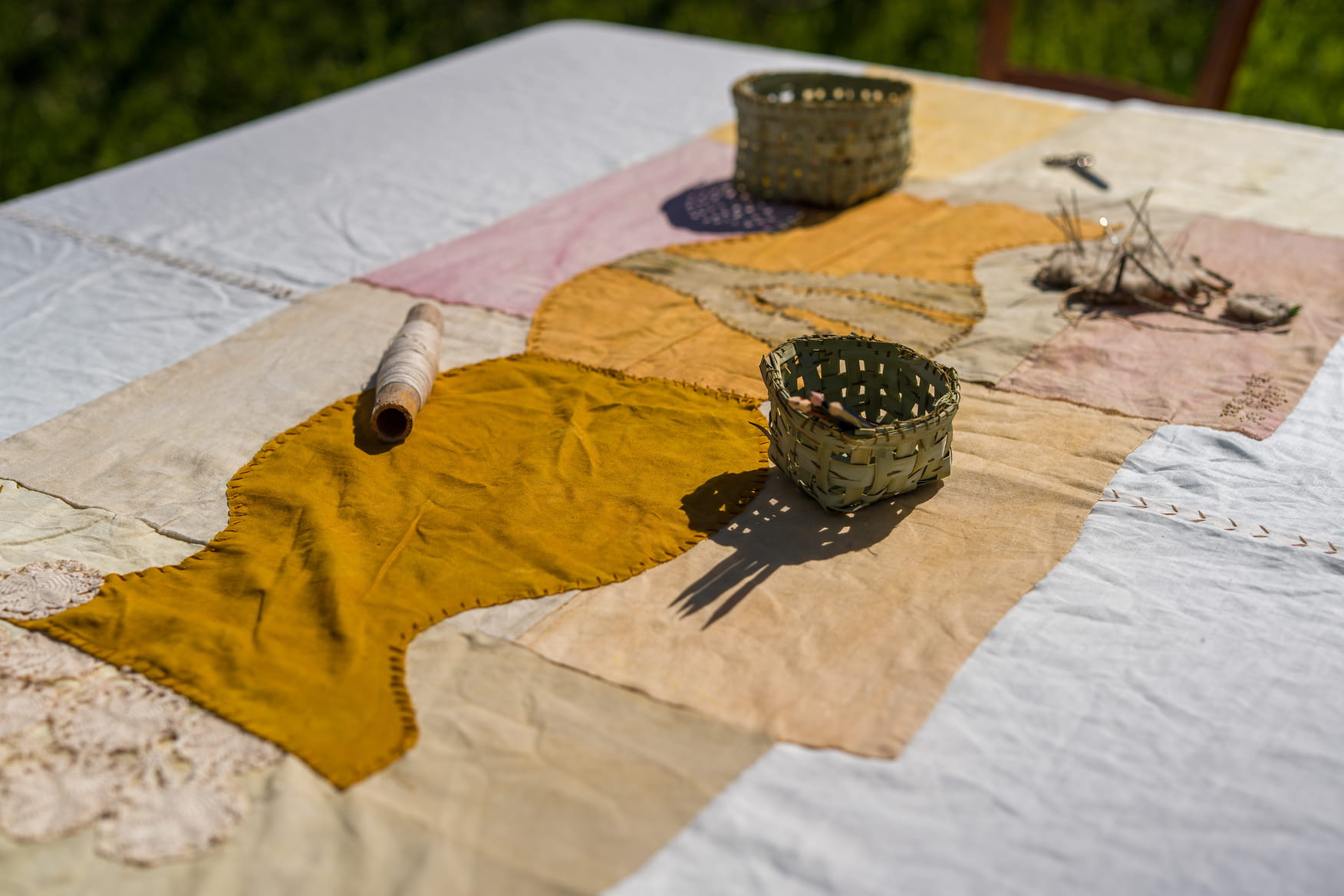
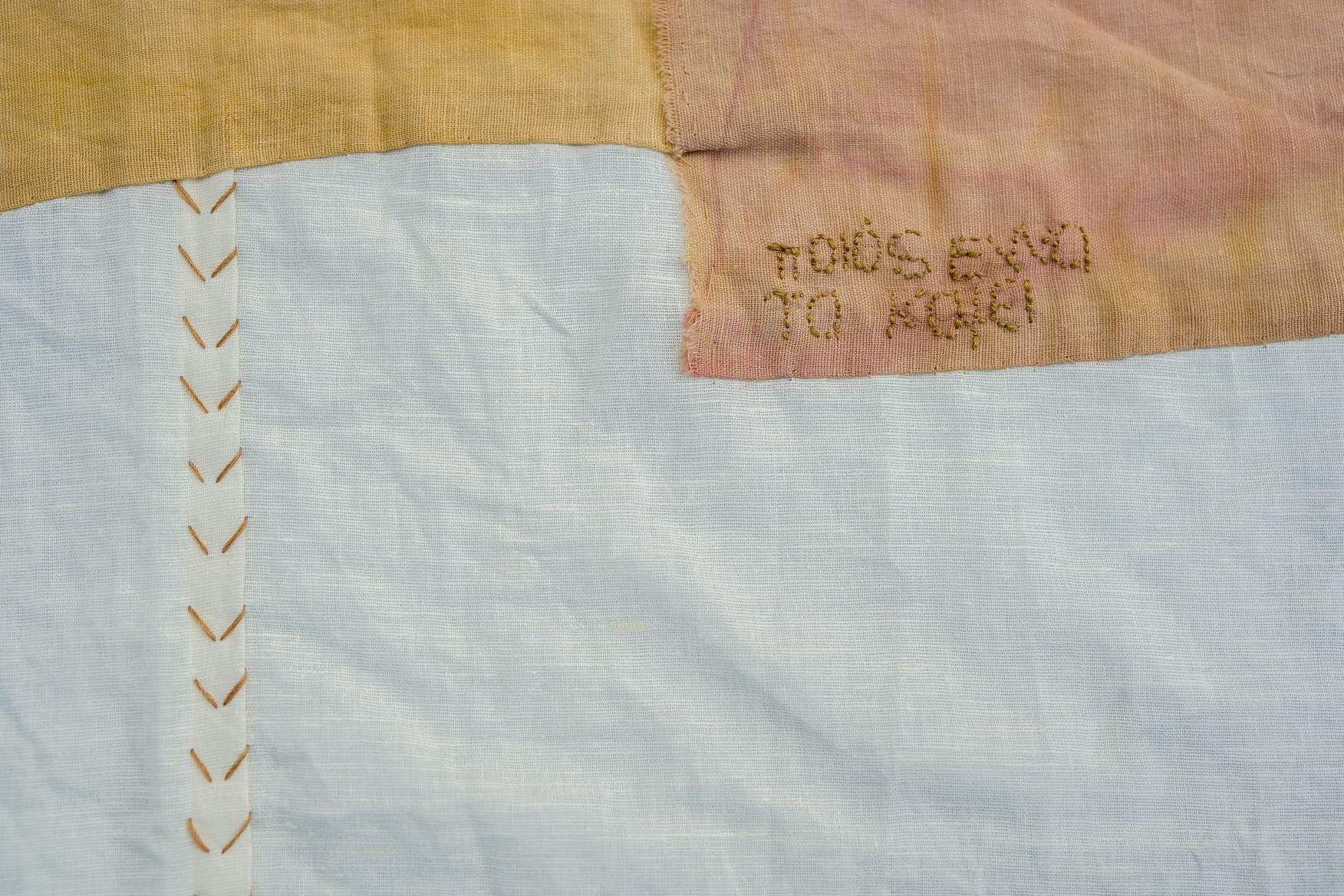
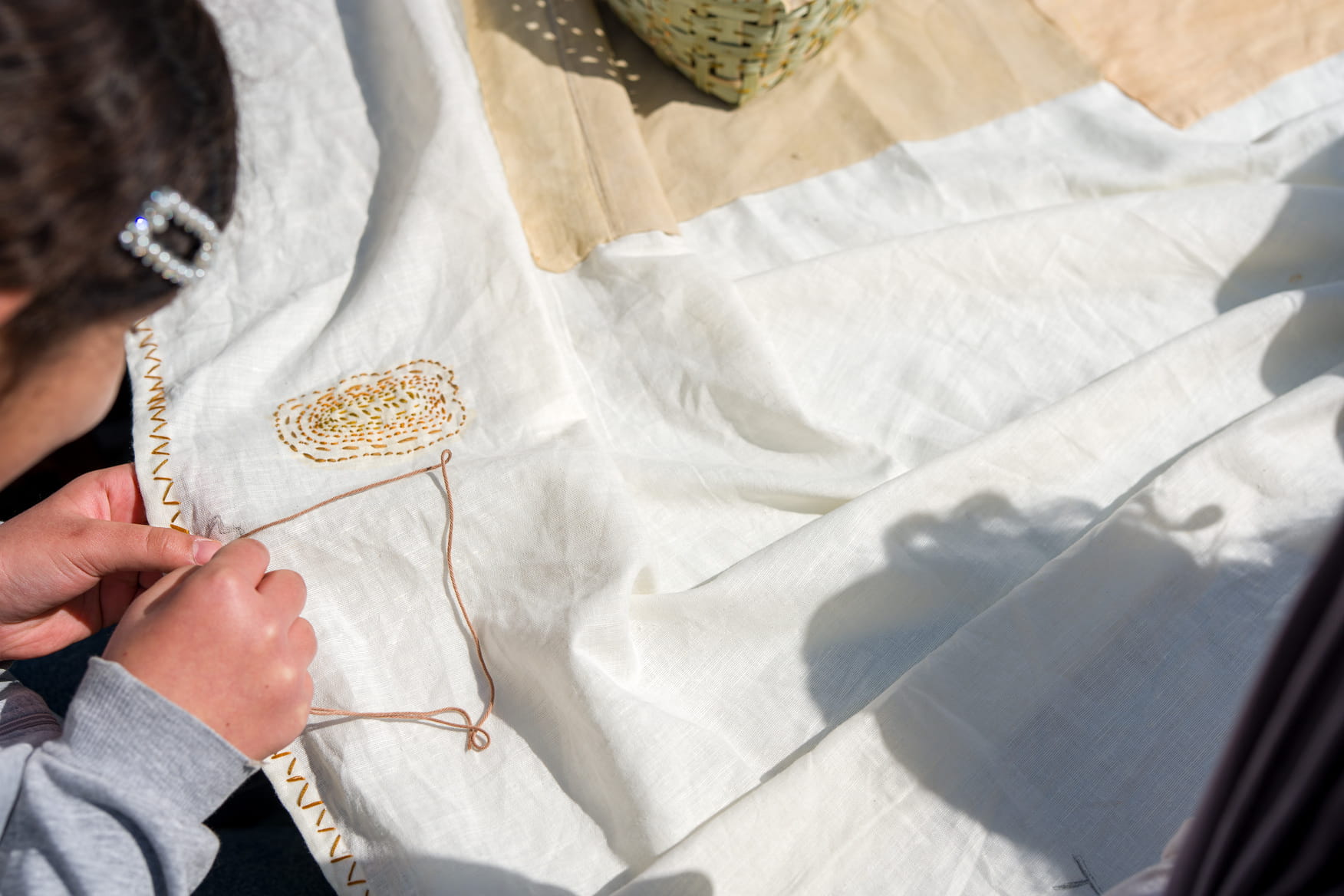
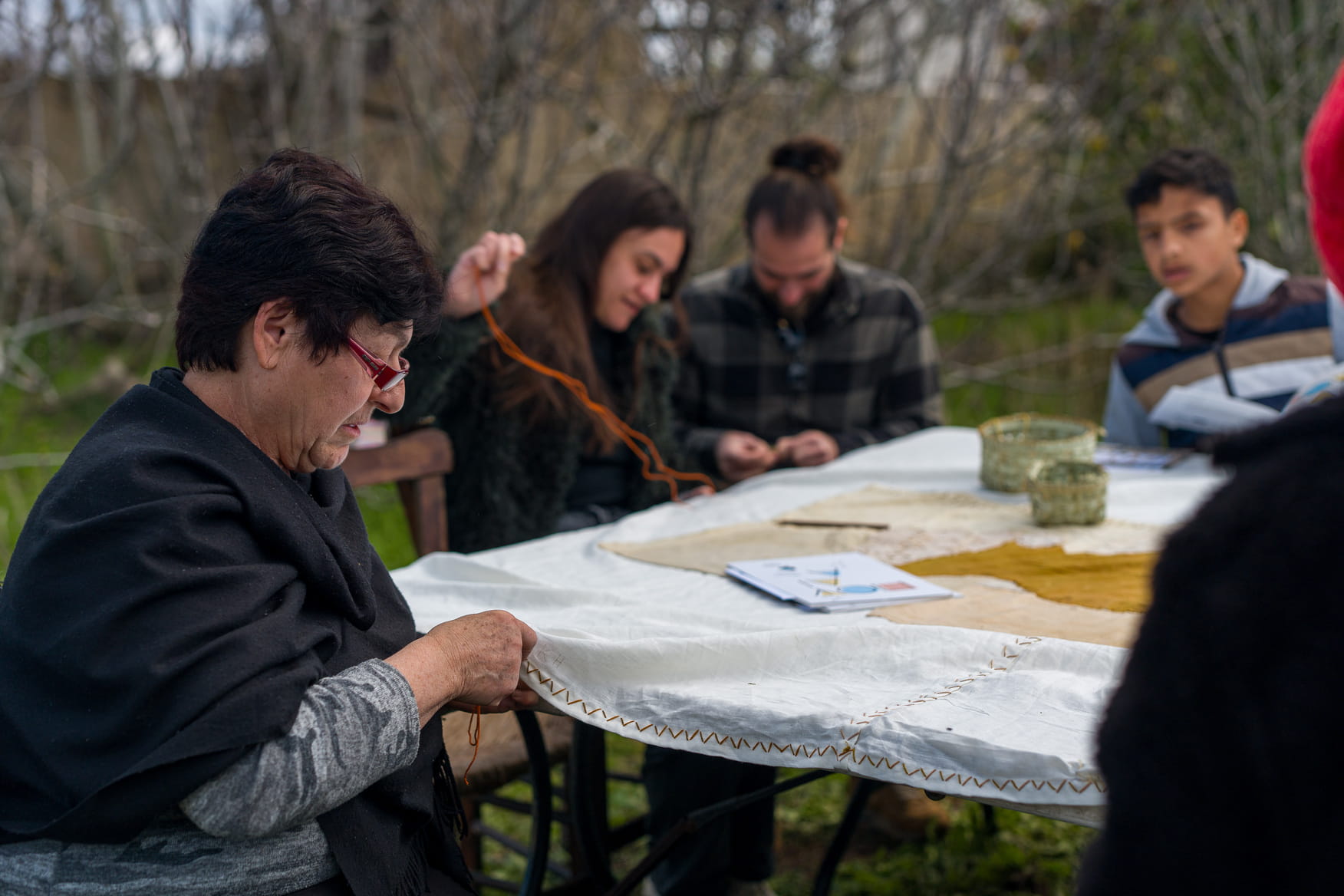
For Živilė Steniukynaitė-Fornari, the relationships between food, place, and community unfolded through textile processes. Her research involved collecting stories, materials, symbols, memories and everyday traces from the surrounding landscape and its people.
She also experimented with natural dyes made from local plants and food scraps.
A central element of her research was the idea of textiles as living archives capable of registering time, territory and collective memory through their material presence.
Within this approach, the tablecloth becomes a site of encounter rather than a finished object: something that gathers people around a shared surface, while carrying traces of the place and the stories connected to it.
For Shuang Xu, the starting point was the rich knowledge surrounding the wild edible plants growing in Paphos. Her research focused on the edges of the landscape, including contested lands, abandoned villages, roadside paths, and places shaped by environmental change and political histories.
Walking through these different landscapes, wild plants became a way of entering conversations about place, movement, and belonging. Through conversations with local communities, farmers, seasonal workers, and people who have made Cyprus their home, Shuang Xu explored how food knowledge is constantly changing, shaped by migration, displacement, ecological conditions, and the realities of living in a changing environment.
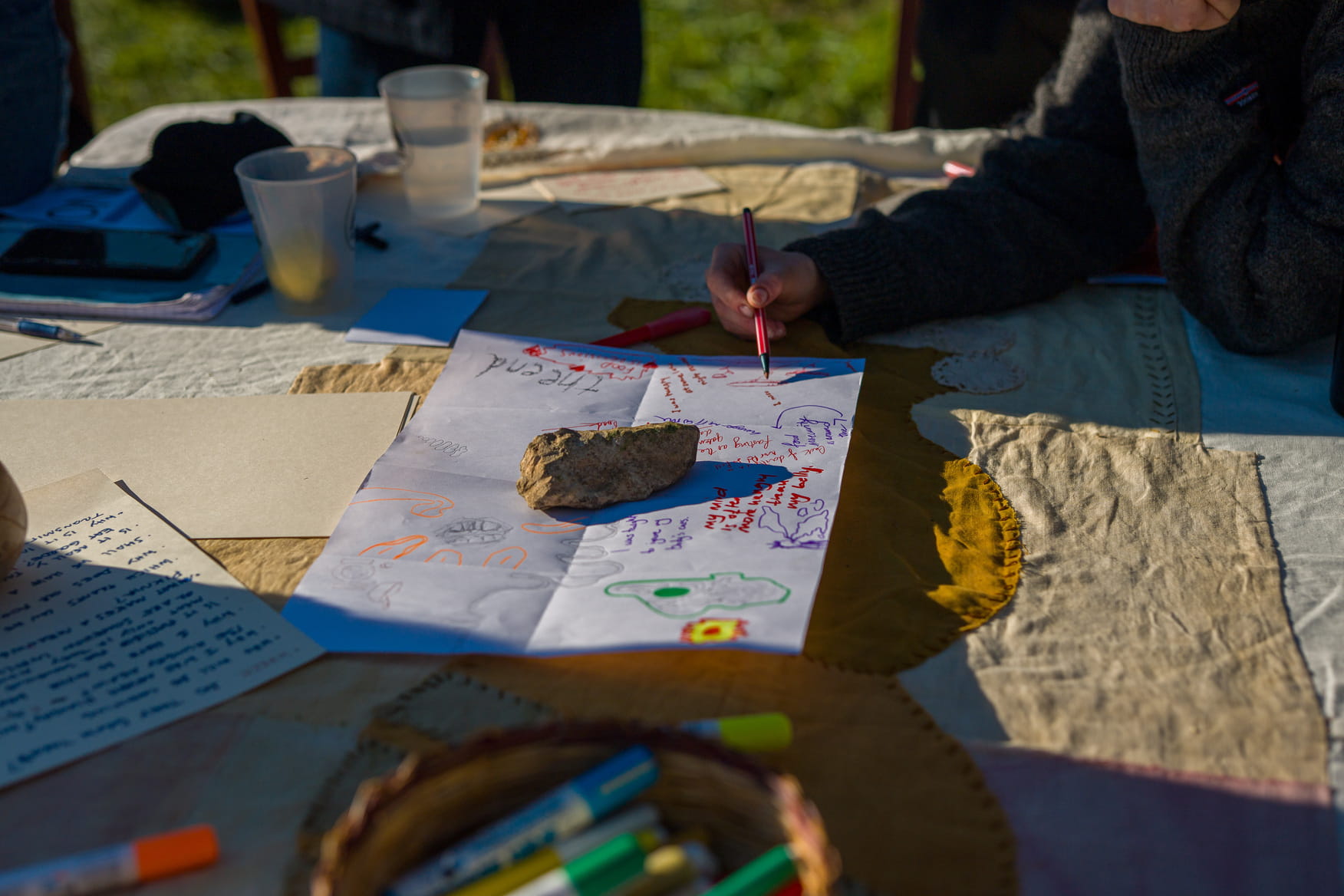
A different way of exploring the relationship between the territory and its community came through storytelling. This became the starting point of Helena Estrela’s project, inspired by the recurring presence of gourds encountered throughout the residency.
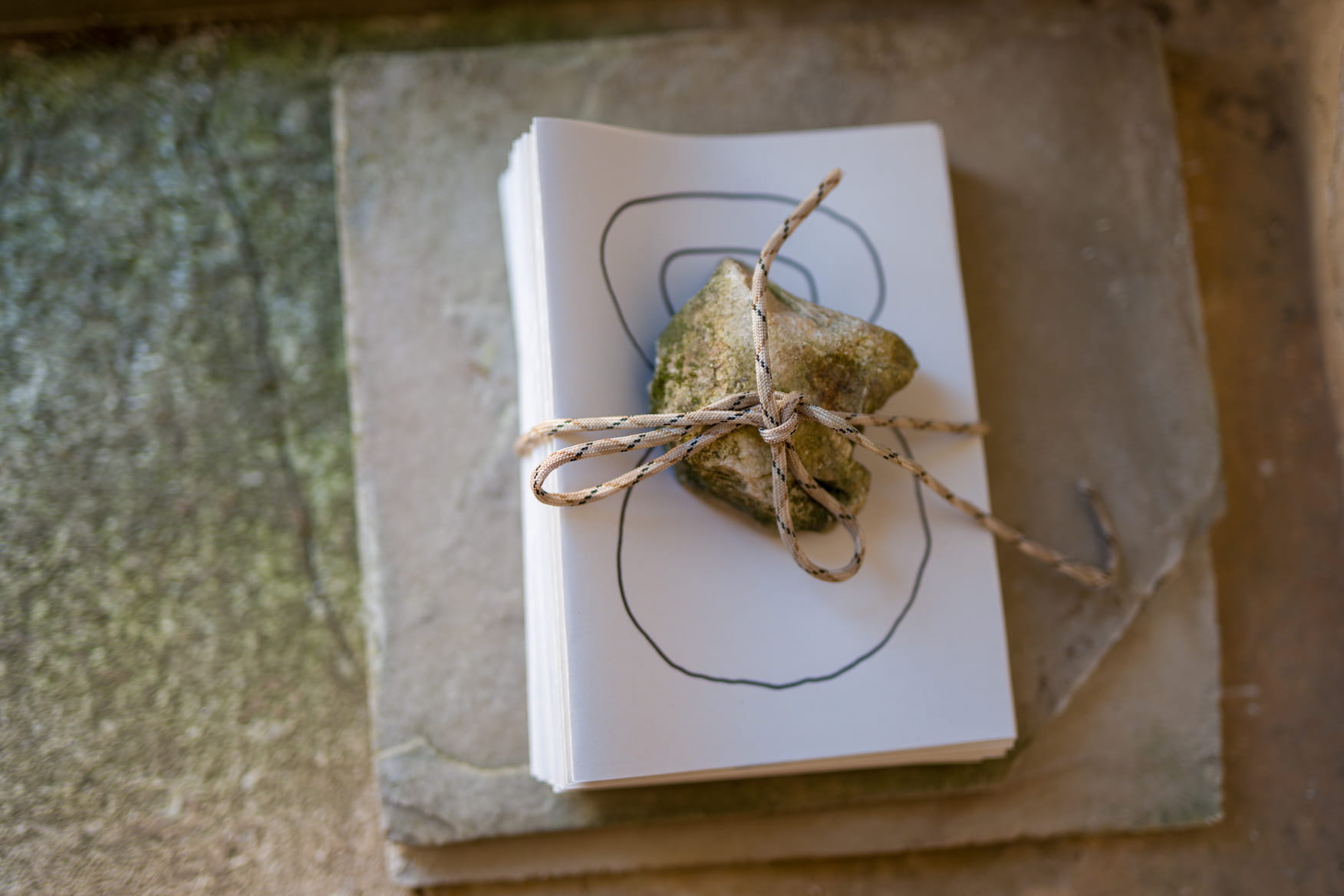
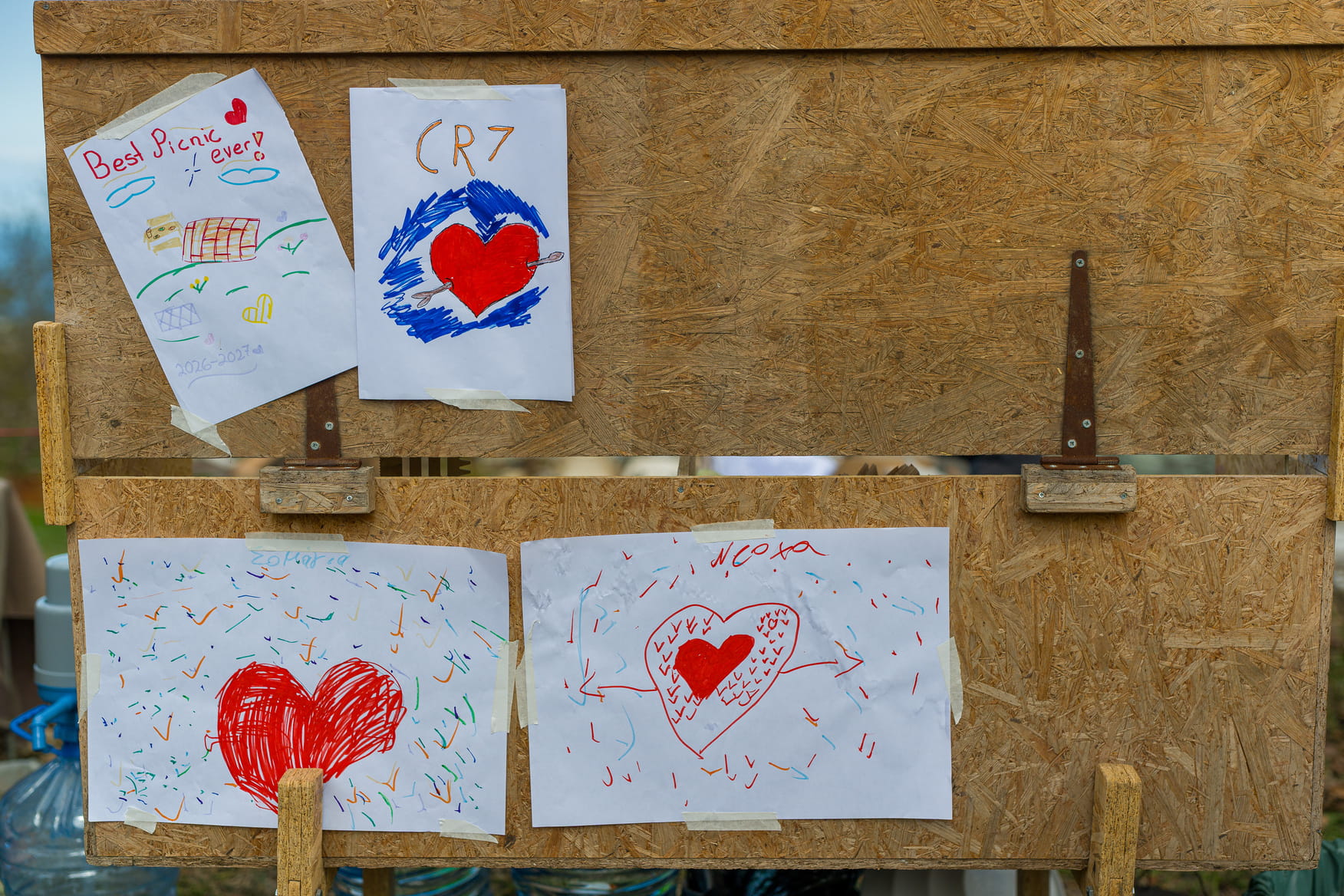
Part of the writing evolved into a children’s zine exploring borders, territory, and freedom. As part of this process, a workshop was developed for the local primary school, where children were invited to draw and tell stories about food, with the intention of creating a small archive of the cultural traditions and memories that coexist.
From Research to Public Presentation
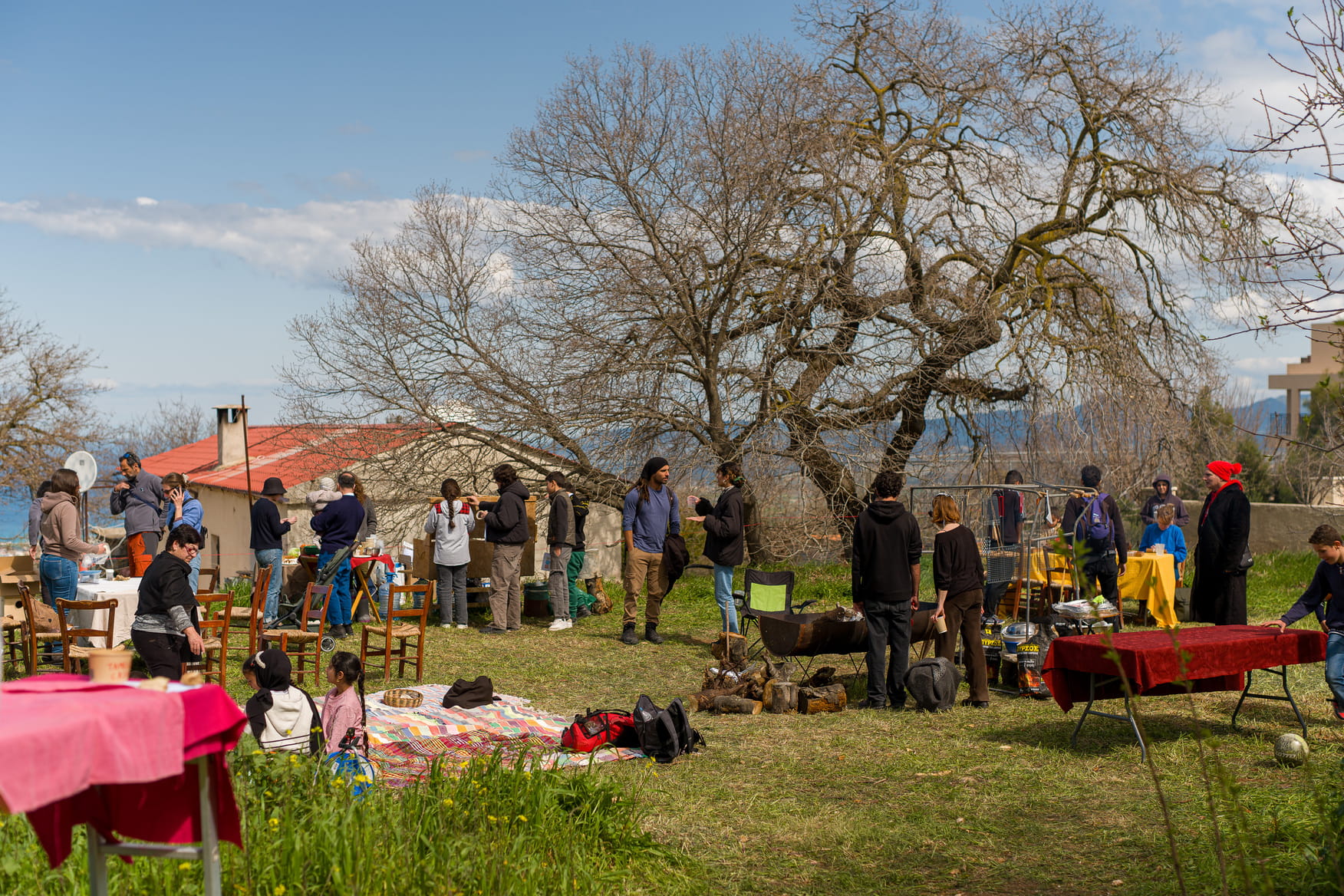
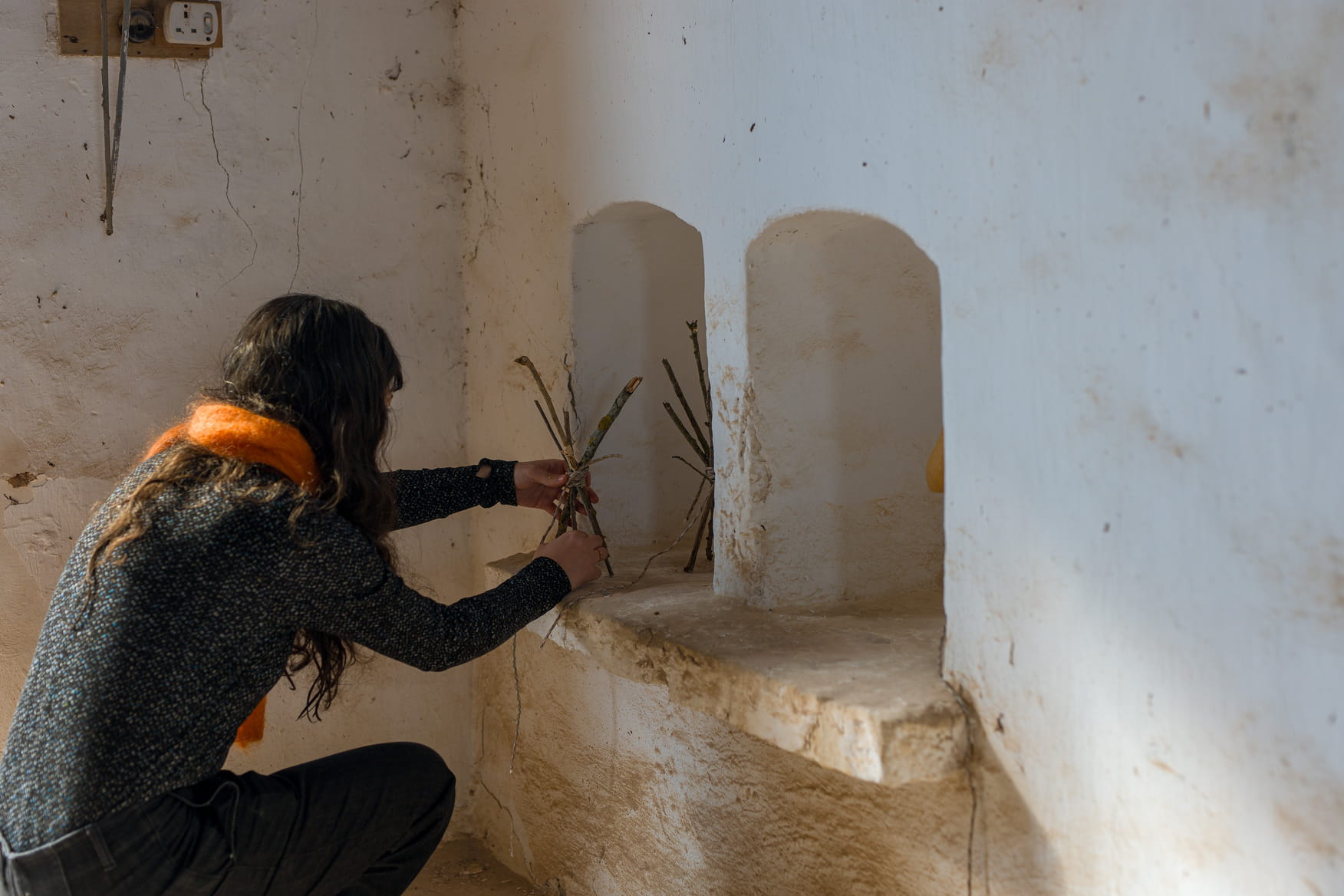
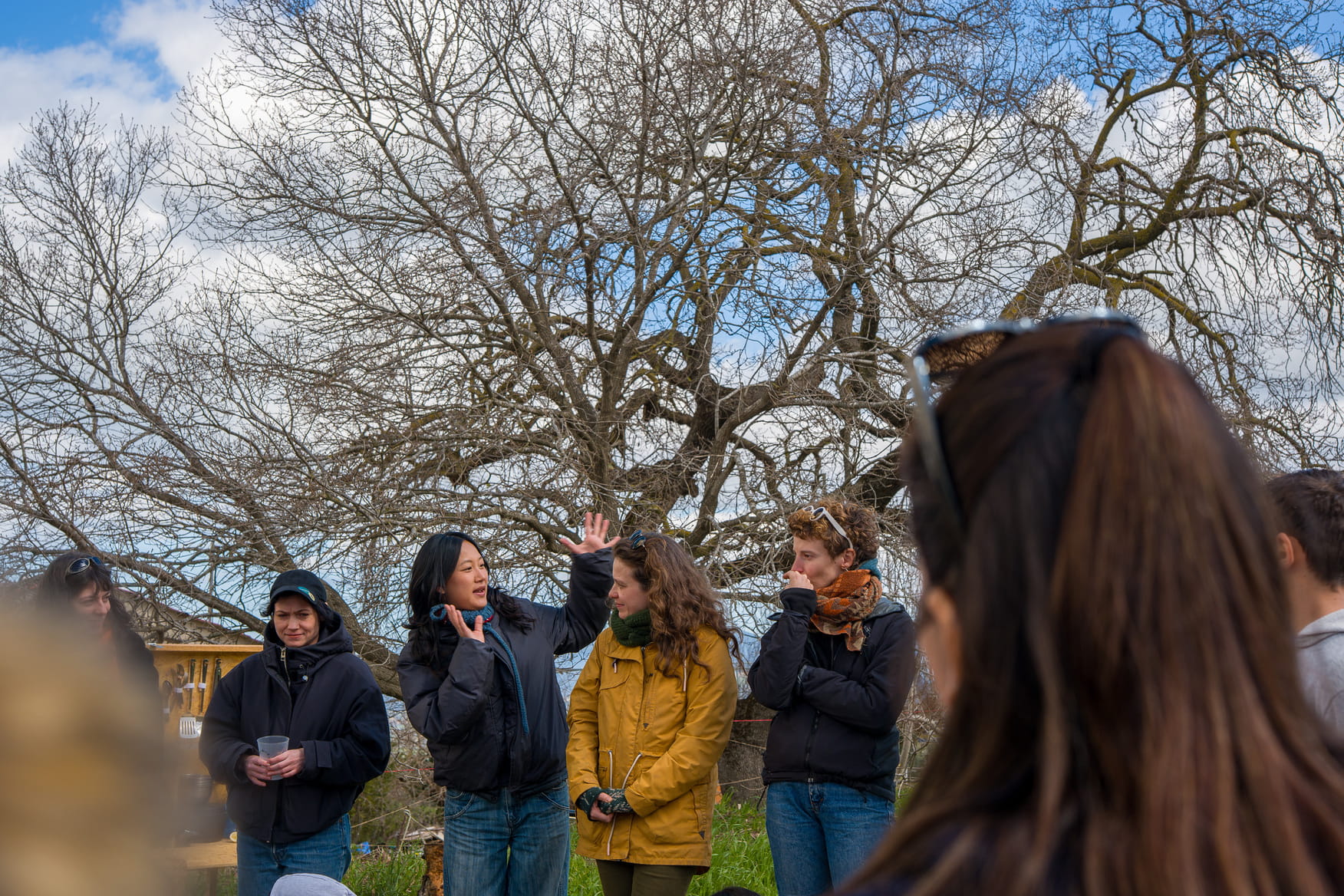
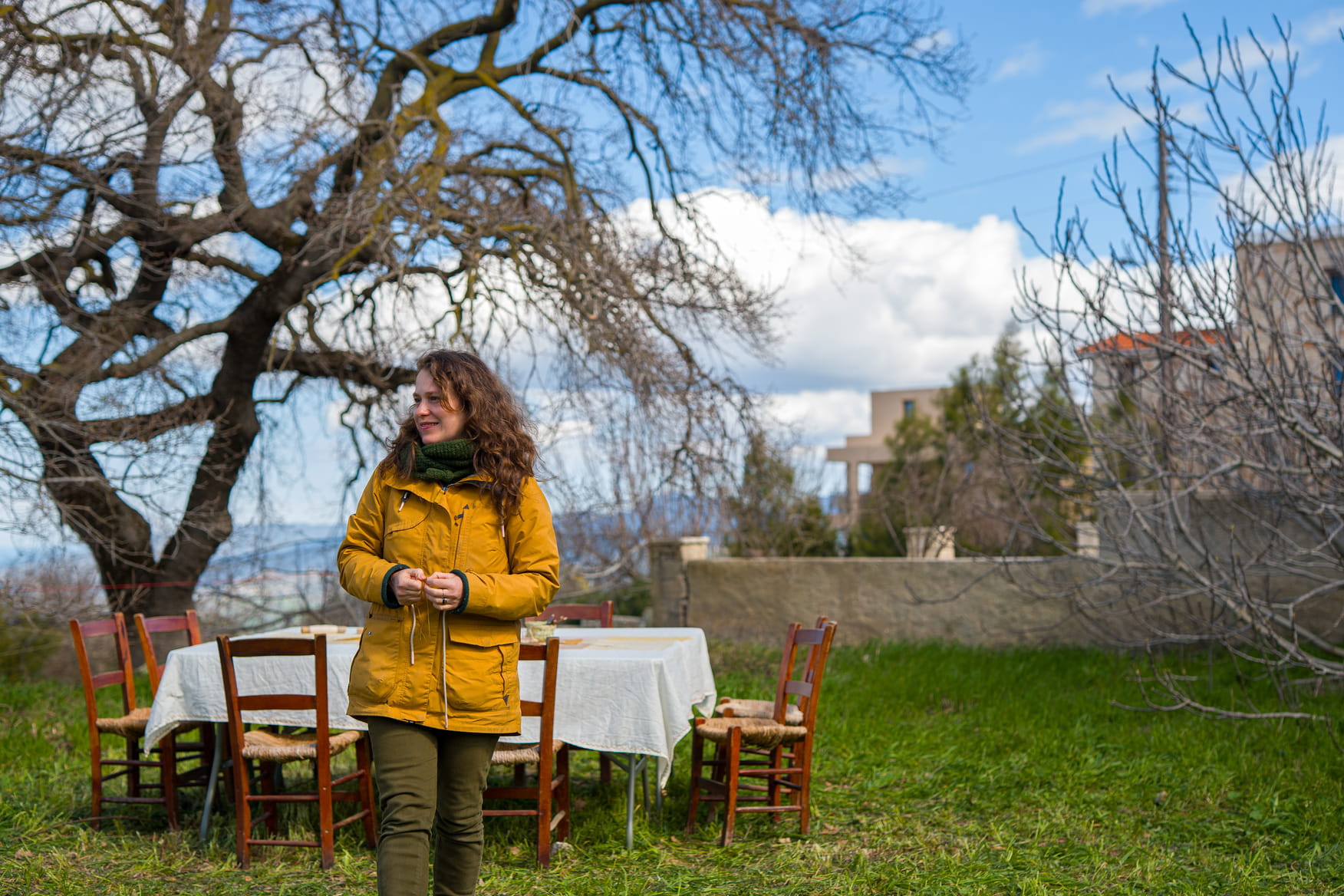
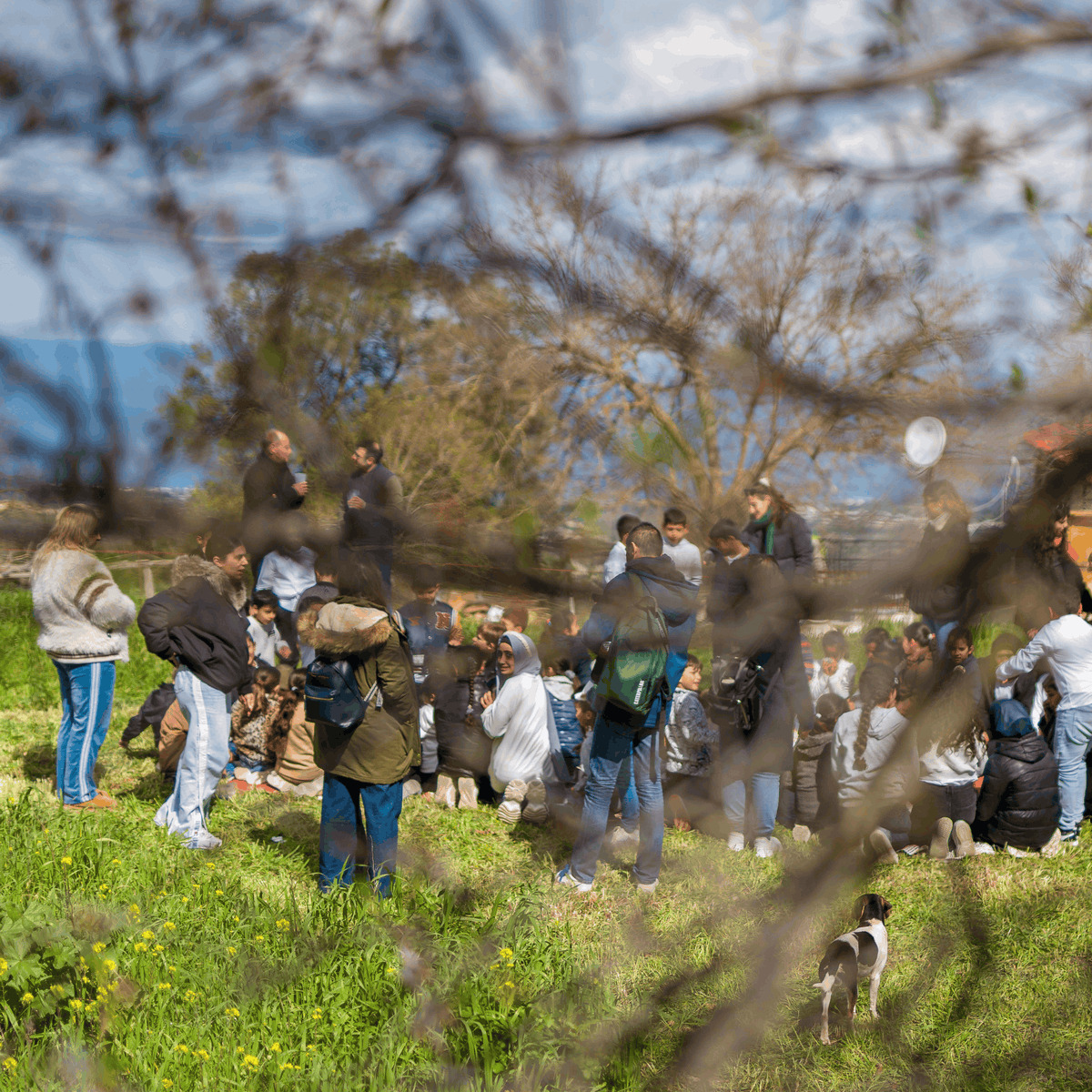
The residency culminated in a final public event that brought the artists’ research into direct contact with the local community. An abandoned house was transformed into an exhibition space, while its garden became a place of gathering. Here, the artists presented the outcomes of their work through a series of creative formats and installations.
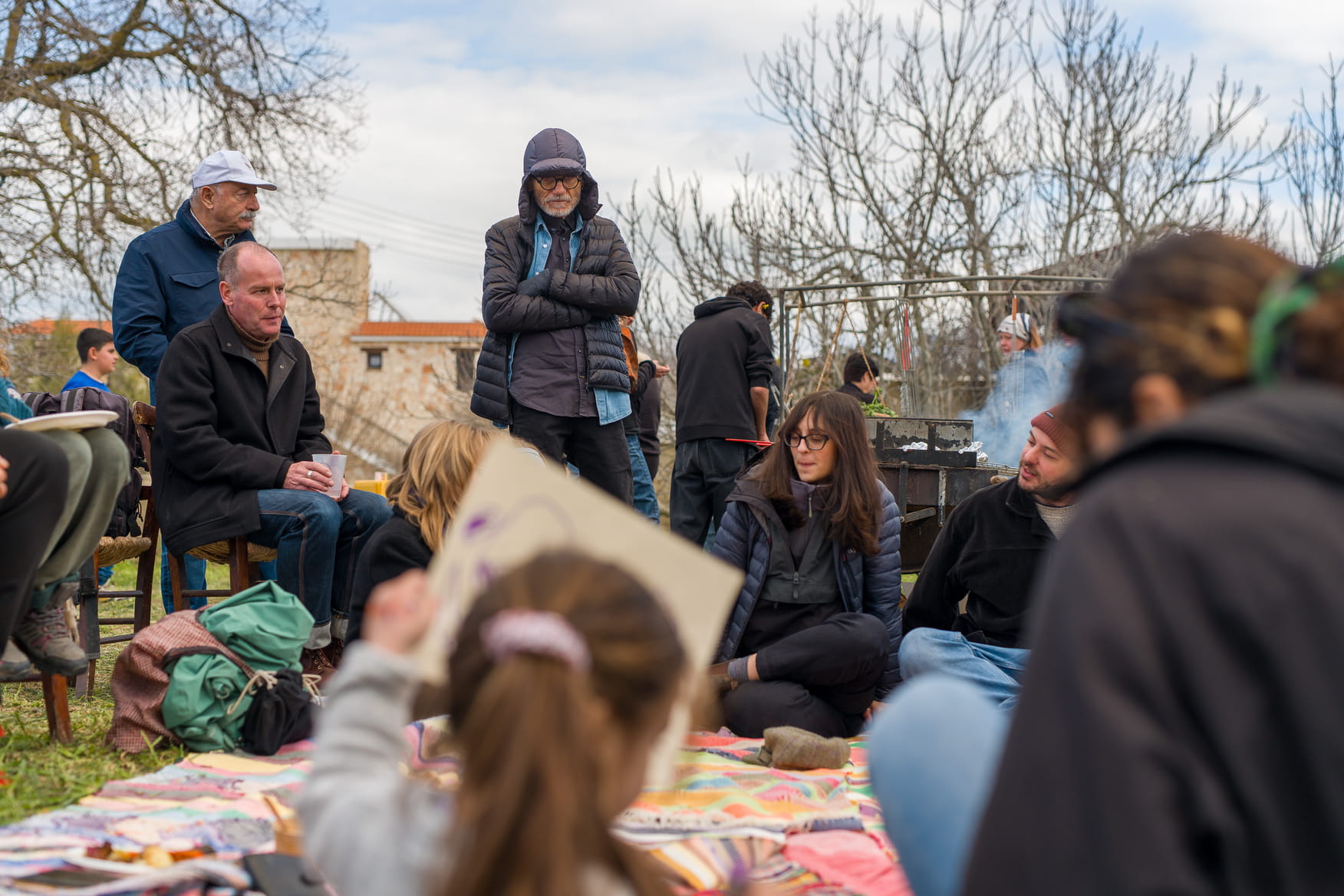
A picnic was also organised, creating an informal and convivial setting, encouraging people to share food, stories and experiences in a familiar setting, while creating opportunities for mutual learning, exchange and collaboration.
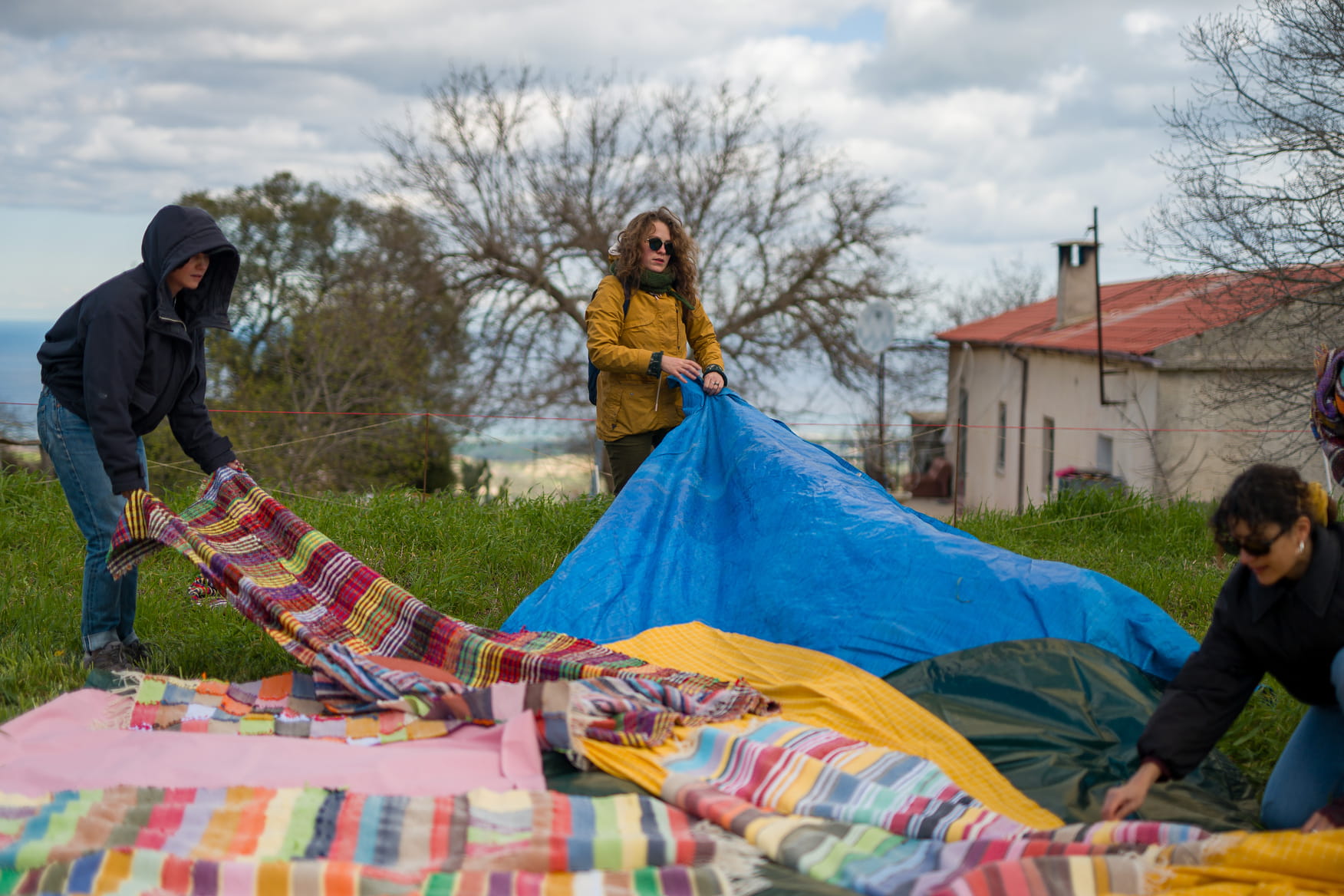
Živilė Steniukynaitė-Fornari’s exploration of the role of textiles in holding memories and stories took shape in “The Cloth”, a large communal tablecloth accompanied by woven textile works. Within the Cypriot context, where vessels evoke abundance, hospitality, nourishment, and continuity, The Cloth became a vessel itself, holding gestures, conversations, and shared experiences.
During the final event, visitors were invited to share food around the table and embroider their names onto The Cloth, leaving material traces of their presence. Through these collective contributions, The Cloth continued to evolve as a participatory artwork and an expanding archive of community, place, and belonging.
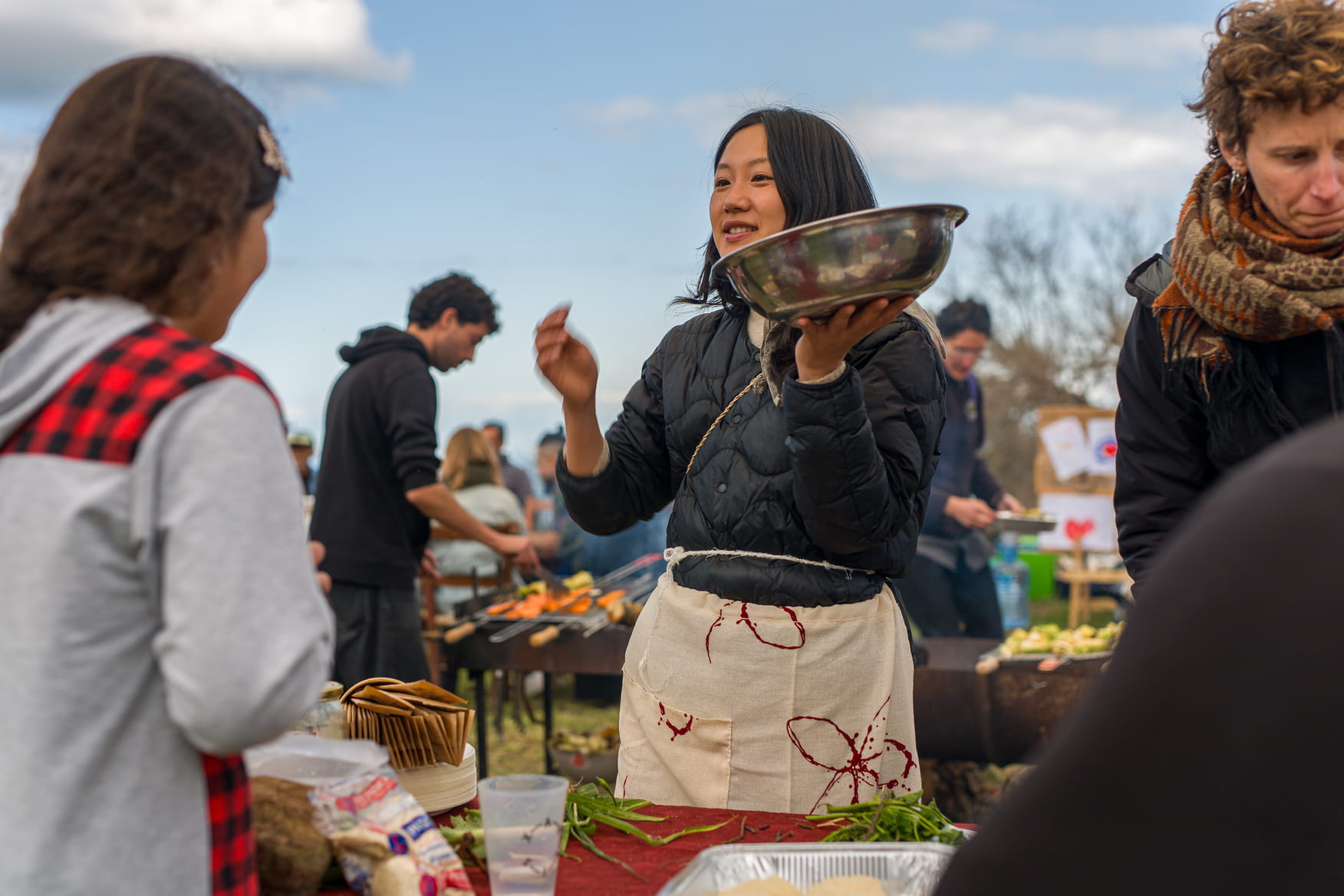
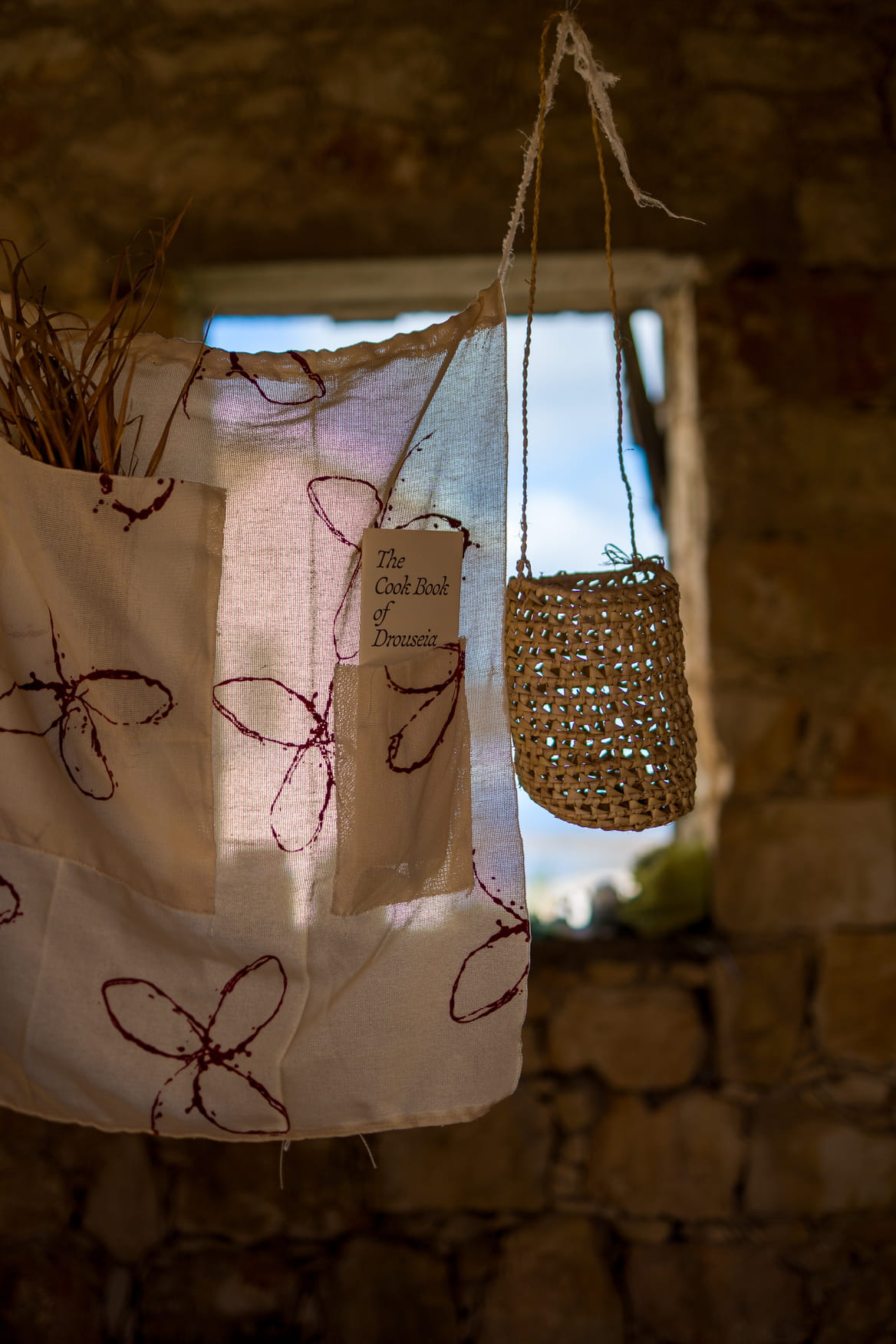
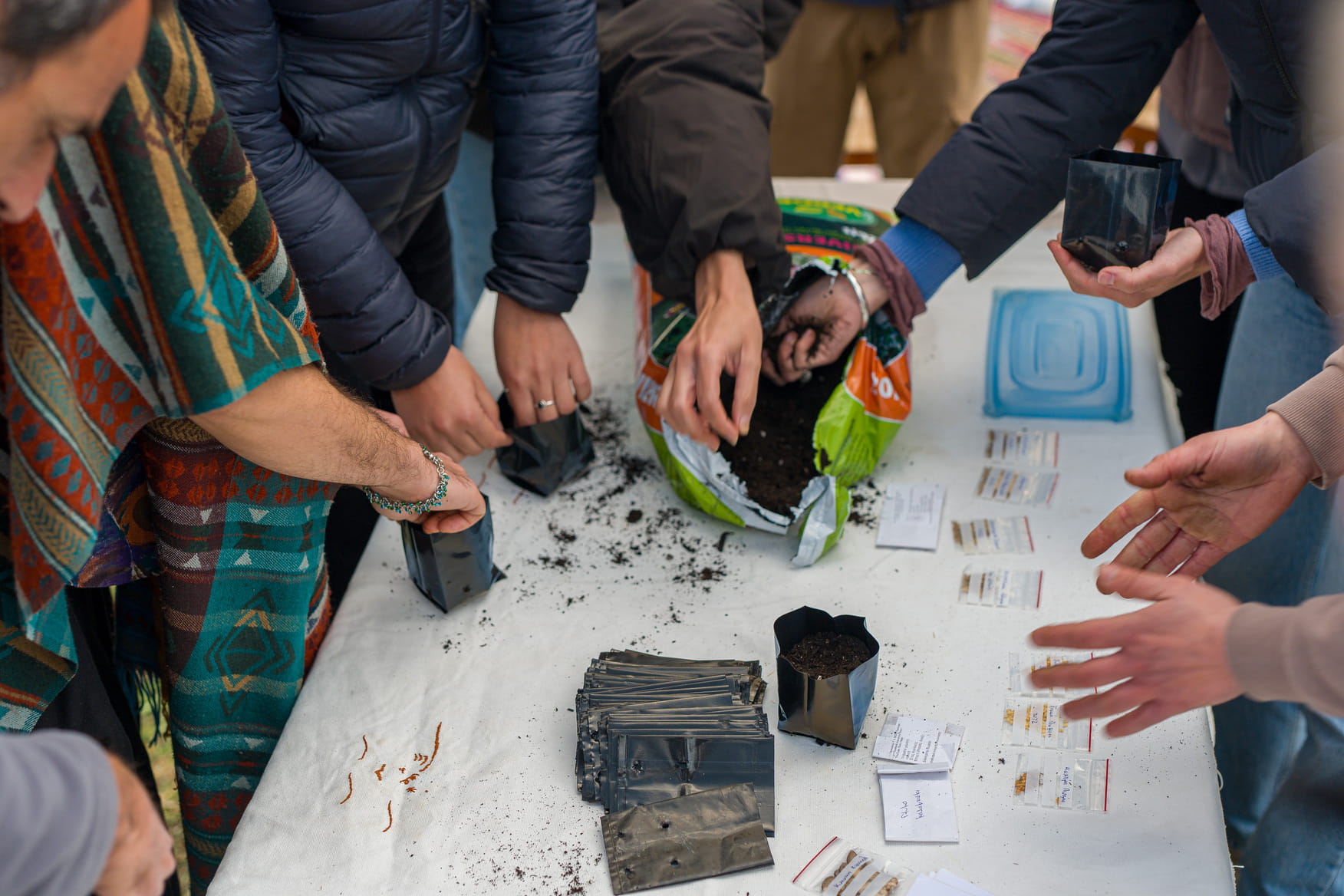
Shuang Xu’s research on wild edible plants and the knowledge associated with them resulted in a foraging apron and a cookbook that brought together recipes, plant knowledge, oral histories, and fragments of encounters collected throughout the residency.
The works reflect on food culture as something alive and unfinished, shaped not only by the past, but also by those who care for the land in the present. They also raise questions about how knowledge survives through change, and how gathering, preparing, and sharing food can become ways of creating connection within landscapes marked by complexity and uncertainty.
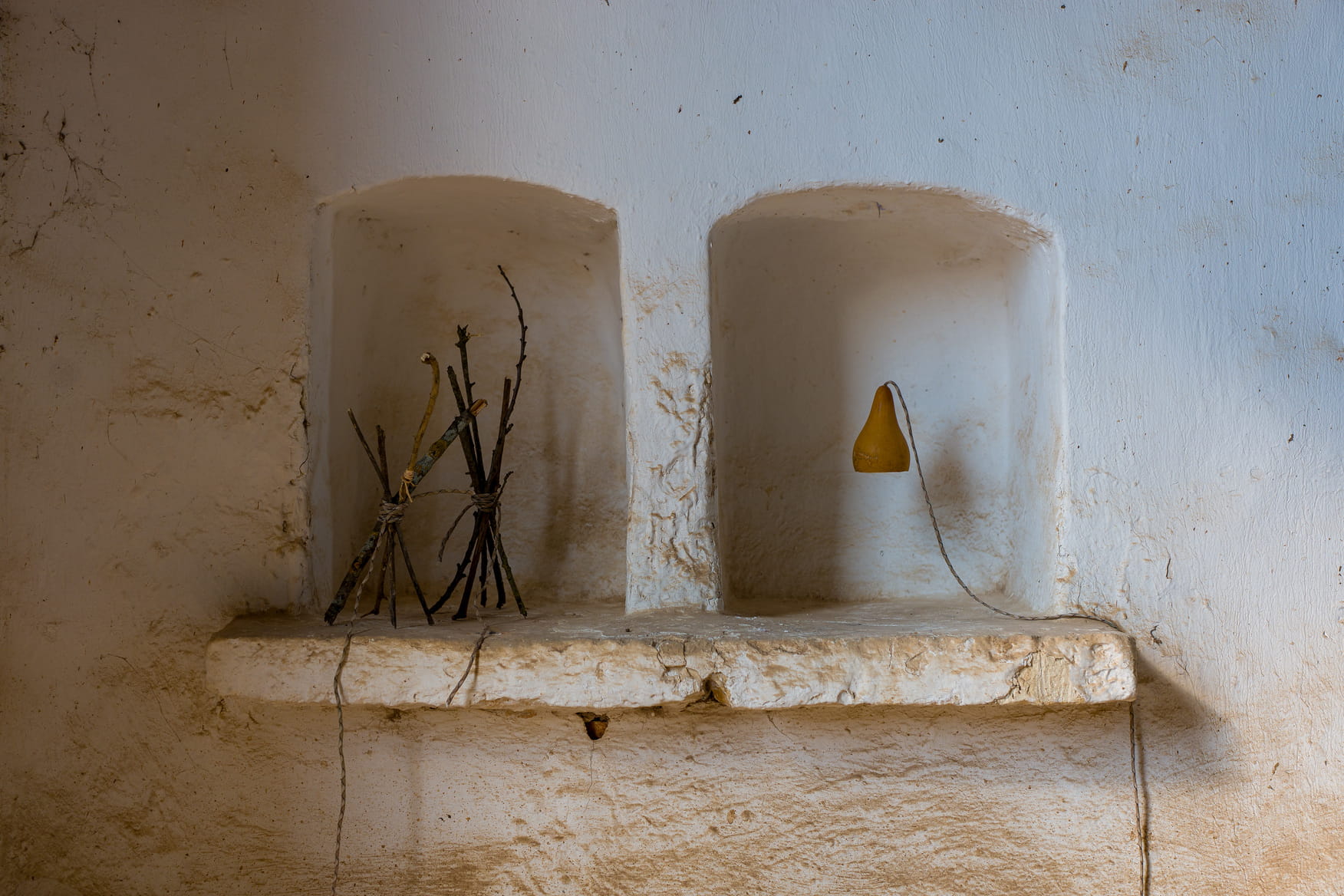
In Helena Estrela’s project, storytelling became another way of exploring the territory and its community. Her work took the form of a publication, and a playful installation centred on a wire telephone made from a gourd, accompanied by a hidden sound piece that created the illusion of wind travelling through stone walls. Bringing together site-specific, interdisciplinary, and participatory practices,the residency transformed research into a shared experience, exploring the connections between food, territory, and community.