Location
Milan, Italy
Dates
14-28 May 2026
Artists
Vlada Predelina
Olga Sosiura
Christina Zampoulaki
Curator
Elisa Lenhard
Host organisation
Municipality of Milan, Reattiva ManiTese
The initiative was conceived as a space for innovative artistic production and exchange around food sustainability and climate action, fostering meaningful dialogue between artists, young people and local communities.
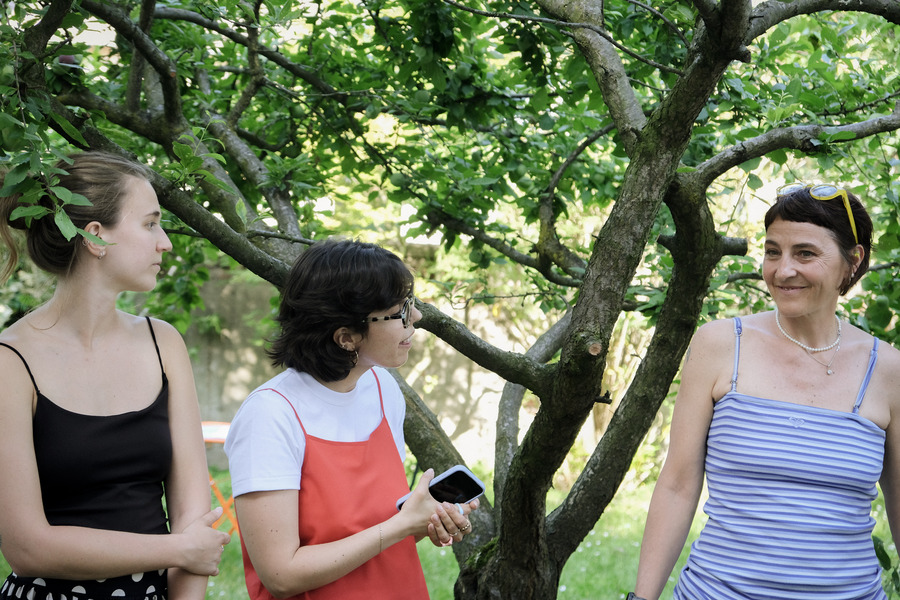
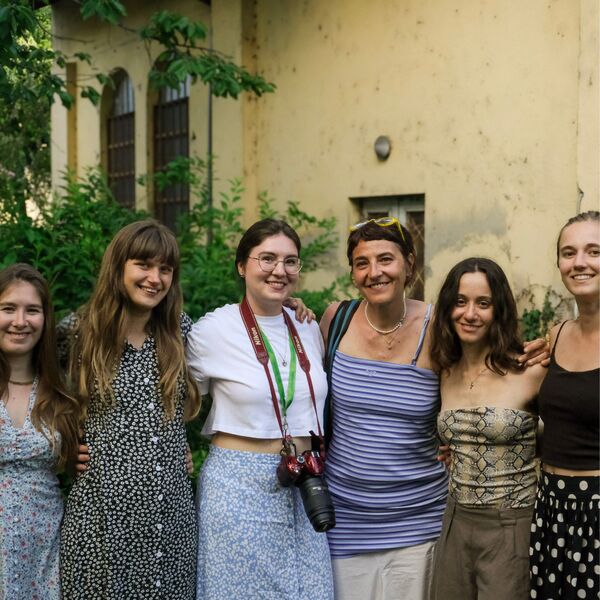
Coordinated by BJCEM – Biennale des Jeunes Créateurs de l’Europe et de la Méditerranée, the residency brought together three European artists – Christina Zampoulaki, Olga Sosiura and Vlada Predelina -, and curator Elisa Lenhard.
Under the theme “Edible Commons: Performing the Future of Food”, the residency unfolded through an open and collaborative exploration of Milan and key places within its food system, and culminated in a multisensory exhibition, where the artists shared the outcomes of their work with the local community.
Artistic Research and Community Engagement
The Residency methodology combined field observation, interviews, sound recordings, photography and video, building a sensitive archive of the relationships between food, territory and human labour. This approach encouraged the artists to explore food as an ecological, social, and infrastructural system.
Throughout the residency, Reattiva facilitated a programme of field visits, meetings and hands-on activities designed to connect the artists with local communities and initiatives working towards more sustainable and inclusive food systems.
The artists gained insights into regenerative agriculture, agroforestry and ecological transition through a guided exploration of the local agroforest Soulfood Forestfarms and its chicken coop “Adotta una Gallina!”, a community hen-adoption scheme that brings residents together through the adoption of hens and the sharing of the eggs they produce.
The artists also visited urban gardens in San Donato Milanese, where they exchanged knowledge and experiences with local gardeners, conducted interviews and collected photographic and video materials. A further visit to the gardens managed by the Yabboq cooperative provided an opportunity to explore the role of urban agriculture in fostering social inclusion.
The programme also included the exploration of local food markets, including Mercato Agricolo Coperto Campagna Amica in Piazza Lima in Milan and Porta Palazzo Market in Turin. The artists were also introduced to other markets across Milan, including Slow food farmers market “Mercato della Terra”, and the Street Markets on via Fauchè and viale Papiniano, offering further opportunities to explore local food networks. Other activities included field visits to local initiatives and cultural spaces, including Cascinet and BASE Milano.
Together, these experiences allowed the artists to engage directly with local food production, distribution and community practices, enriching their artistic research through exchanges with the people and organisations involved.
Individual Artistic Approaches
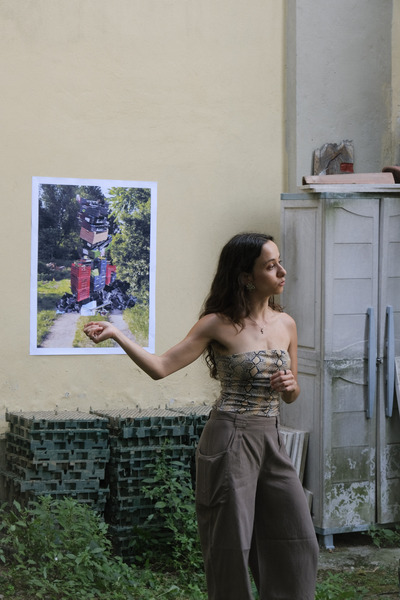
Christina Zampoulaki focused on how human intervention becomes perceptible in the landscape through images, sounds, and recordings gathered in the field. Her research explored the agricultural areas, logistics networks and distribution infrastructures surrounding Milan, investigating how food production and consumption shape the contemporary landscape and bringing to light aspects of the food system that often remain invisible.
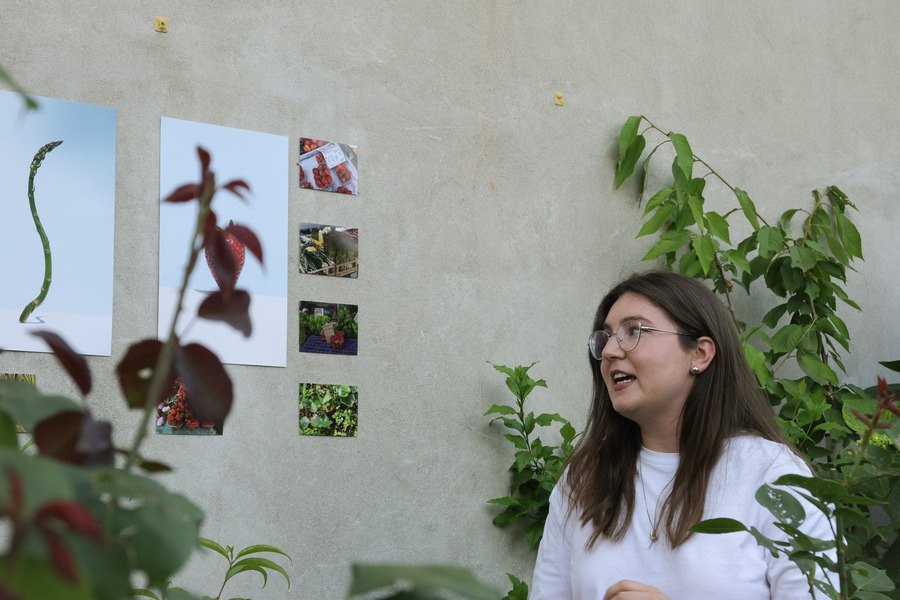
Olga Sosiura explored seasonal food as a living, relational system, tracing ingredients through the markets of Milan and Turin and placing producers and sellers at the centre as key players in local food networks. Her research highlighted the connections between seasonality, local agricultural practices and human labour, exploring how food reflects the ecological and cultural relationships between people and their territories.
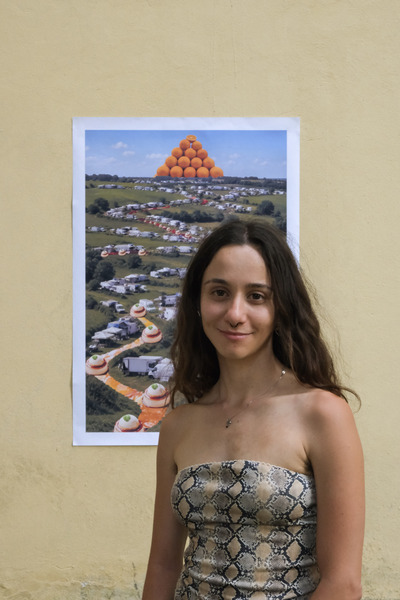
Vlada Predelina investigated food as a collective experience and relational practice, focusing on the connections between soil, production, and consumption. Through a participatory and sensory approach, her research examined how shared experiences with food can foster greater ecological awareness, reconnecting people with the origins of what they consume, and the natural processes that sustain food systems.
From Research to Public Presentation
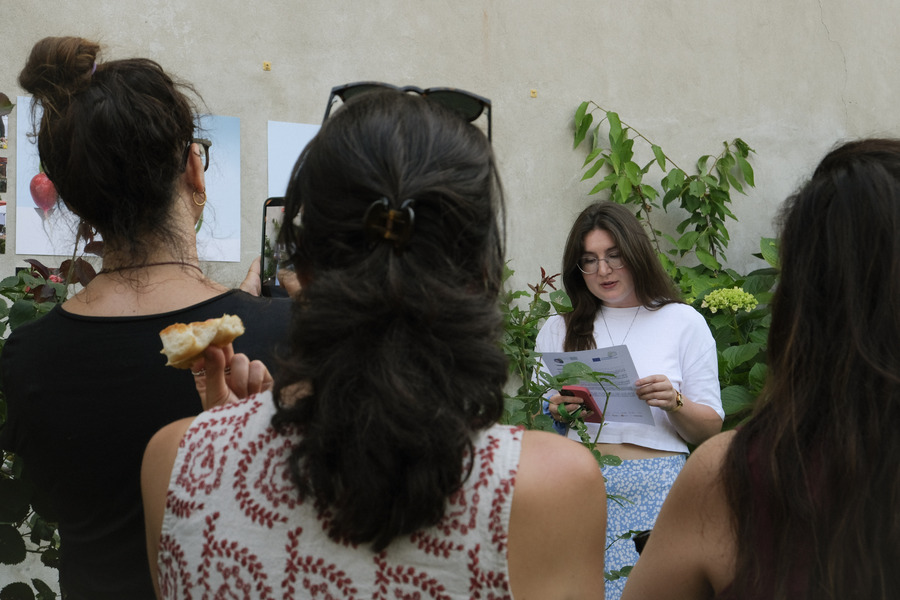
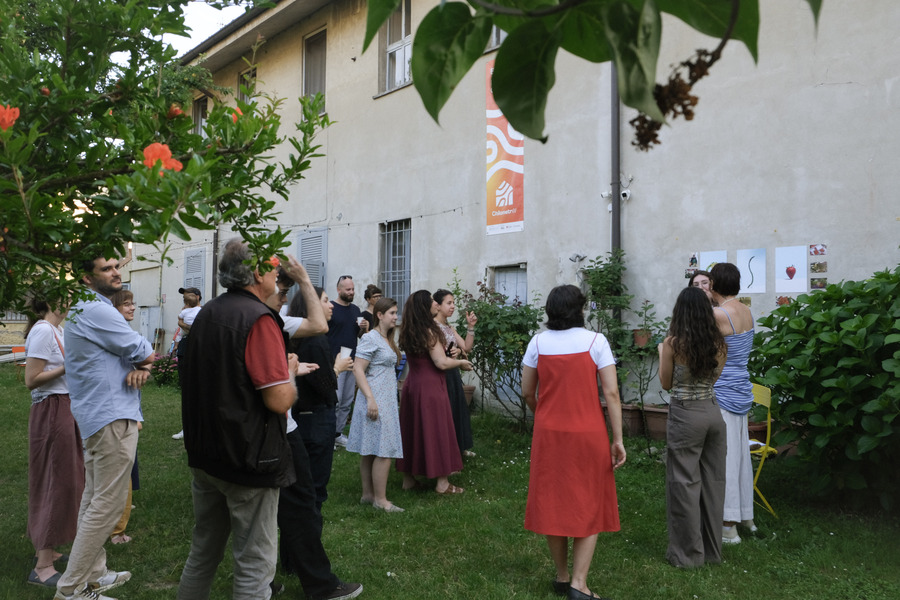
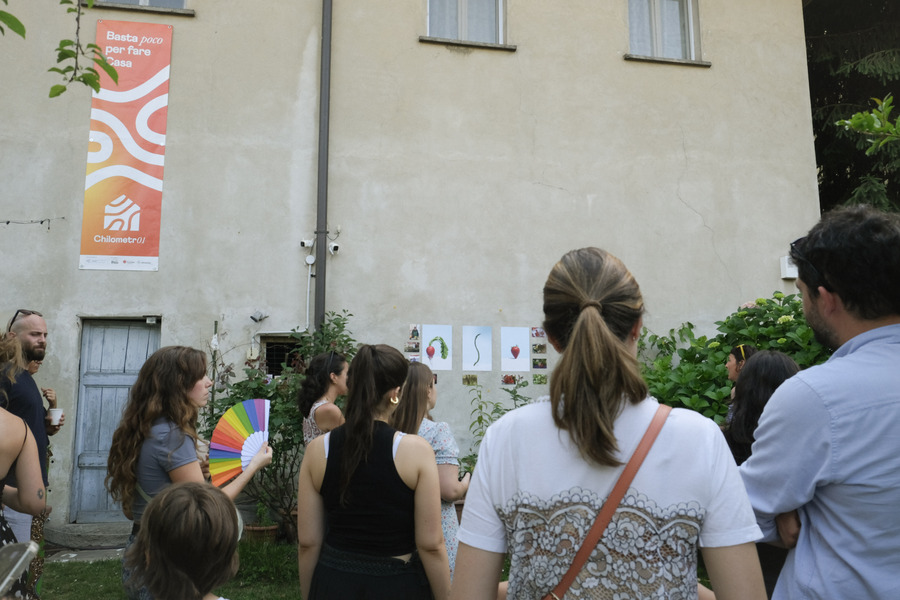
The outcomes of the artists’ research were presented at the final event at “Chilometr01” in San Donato – Milan. Once an underused urban space, the venue now serves as a community hub, a place for social cohesion and participation.
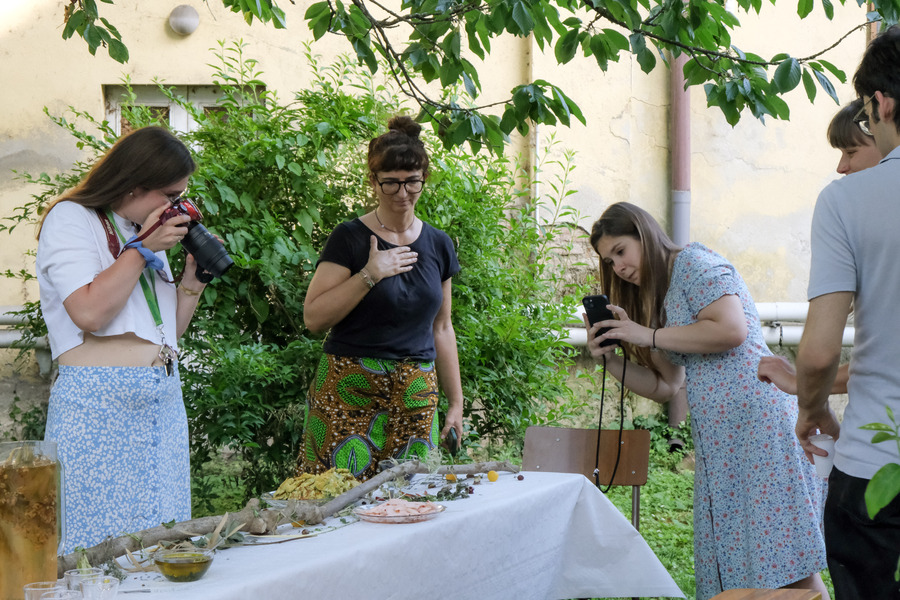
A multisensory exhibition brought together the three artistic practices through diverse yet interconnected languages. The projects were presented as an open experiential environment, prompting visitors to observe, listen to and experience the content through their senses.
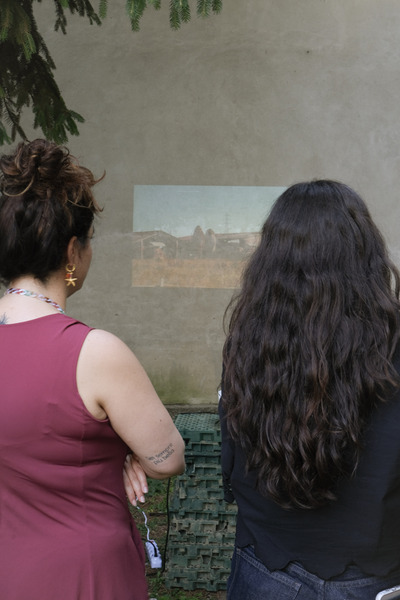
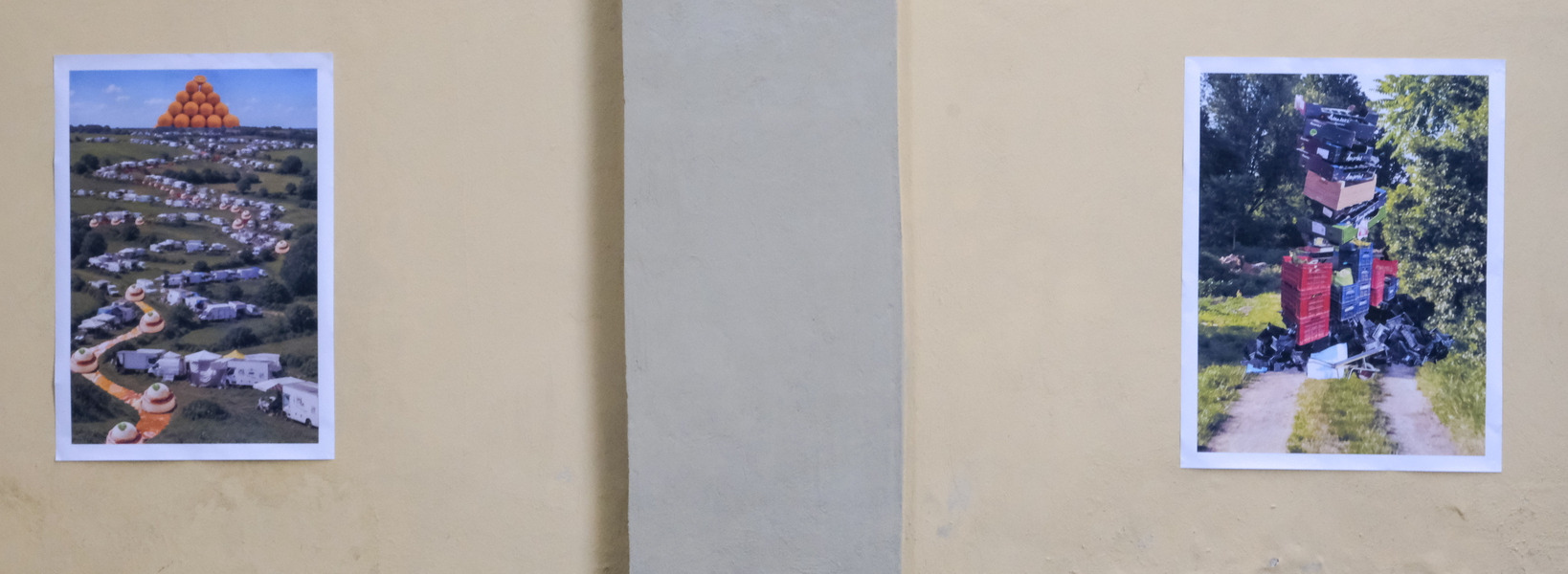
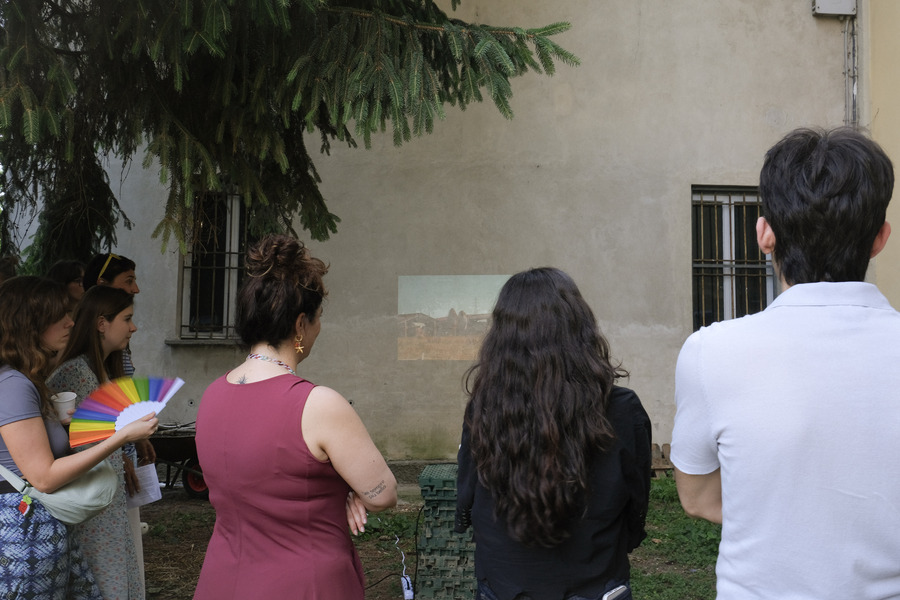
Christina Zampoulaki’s work takes the form of a film-essay exploring the food landscapes surrounding Milan, from farmland, logistics corridors and distribution infrastructure. Through video footage, field recordings and photographs collected during the residency, the work moves between documentation and perceptual construction, revealing the often-invisible infrastructures that shape contemporary food production and distribution. Rather than offering a didactic explanation, the film-essay invites viewers to experience these landscapes through images and sounds, questioning the relationship between food systems and the territories they transform.
Olga Sosiura’s “Edible Commons” is a photographic project that explores seasonal food as a living system shaped by nature, human labour and local knowledge. Through carefully composed photographs of local ingredients, captured using natural light, alongside portraits and observations of market vendors and small producers, the artist highlights the ecological, cultural and human relationships embedded in food. Her work transforms everyday ingredients into visual narratives, revealing the connections between soil, climate, traditions and communities, while encouraging viewers to reconsider food not simply as a commodity, but as a shared resource shaped by interdependence and care.
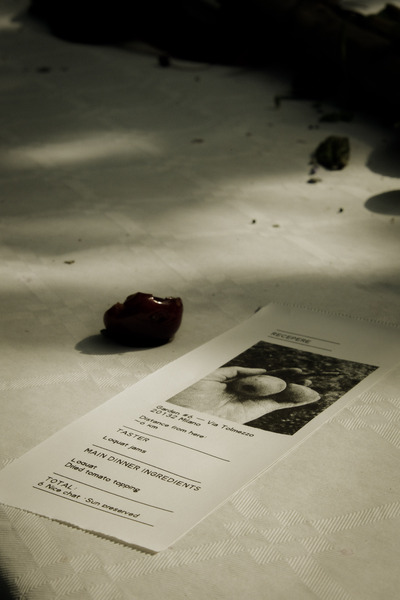
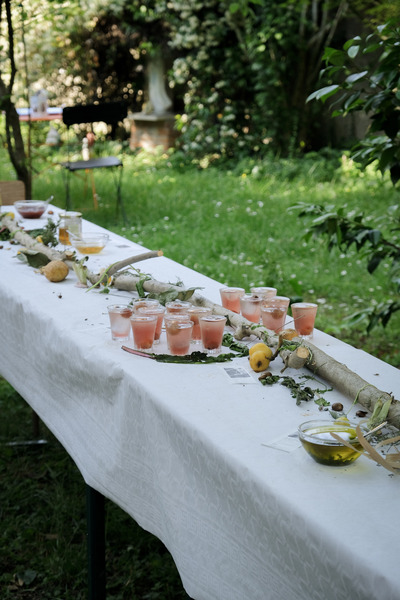
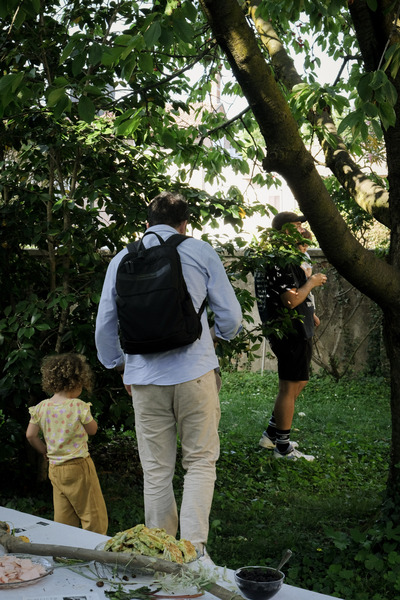
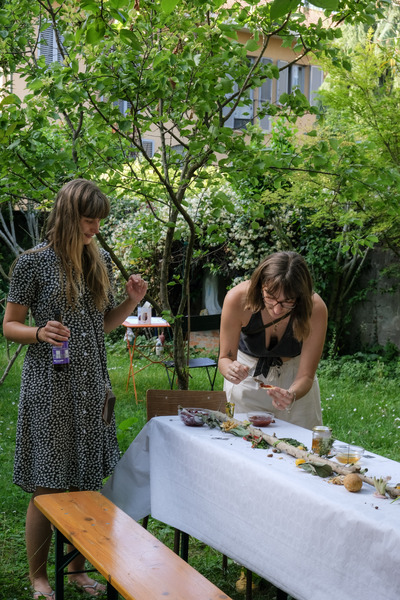
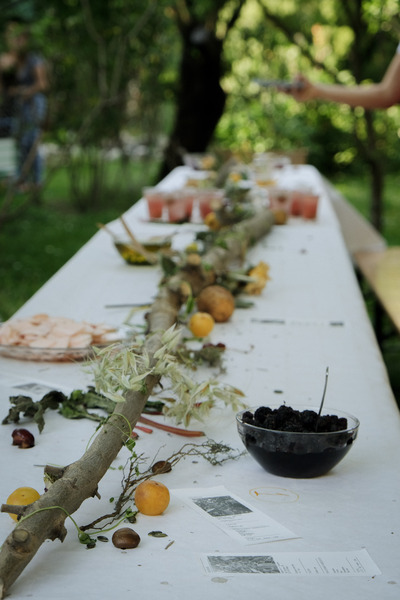
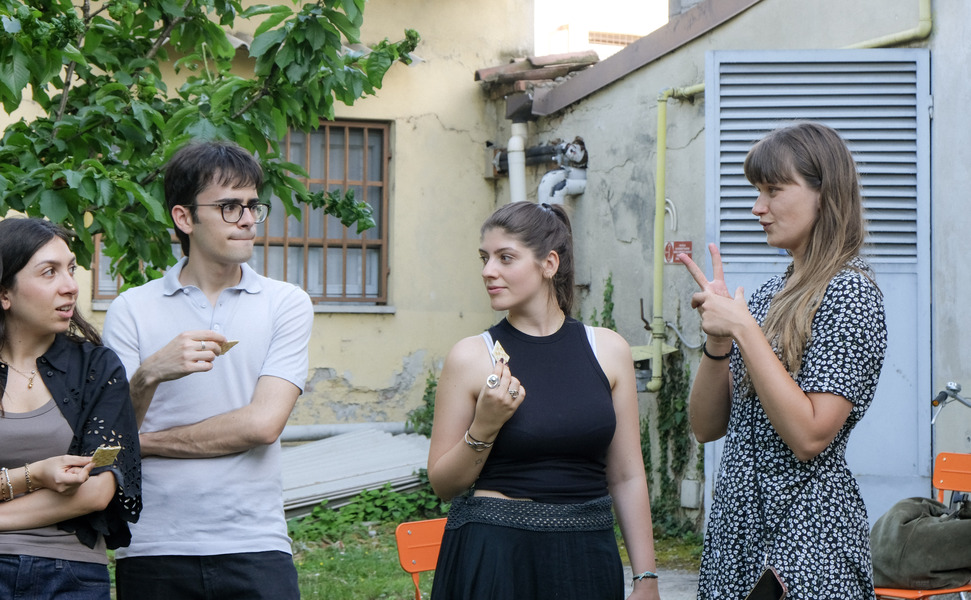
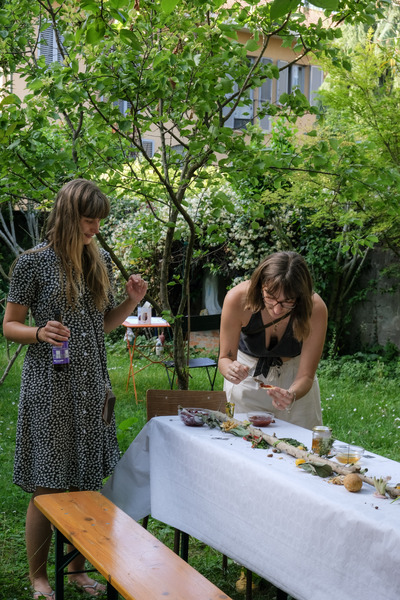
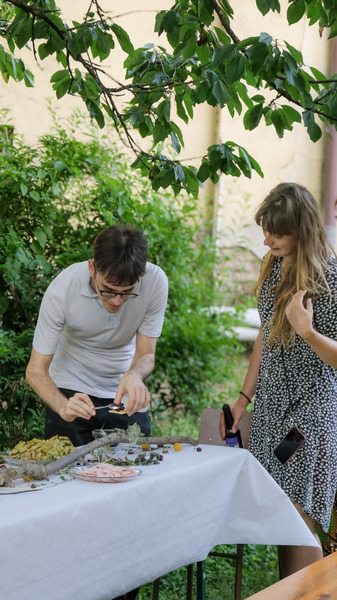
Vlada Predelina’s project took the form of an installation and participatory experience. Tables set with earth, seeds and natural elements, alongside deconstructed recipes, created an immersive environment that reconnected consumption with the soil. The table became a sensory landscape to be explored, activating a tasting experience that served as both an aesthetic and political device. The work centred on the relationships it generated, creating a shared experience of bodily and ecological awareness.
Looking ahead
The experience broadened the artists’ perspective on food, enabling them to address it not only in its cultural, social, and environmental dimensions, but also as a political issue. Overall, the residency opened up new connections and potential collaborations for artists in the fields of artivism, global citizenship, education, and cultural advocacy.