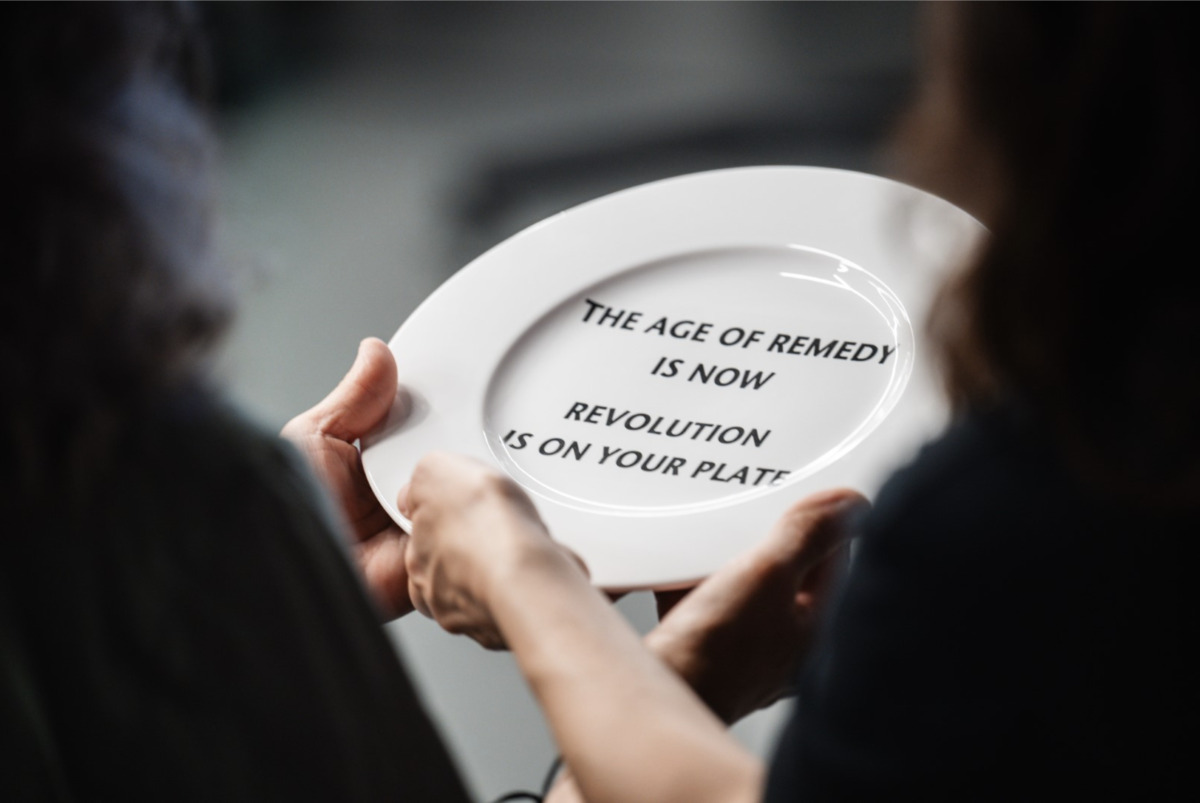
The Feed Your Future project sought to address these questions through the School of Artivism, a free and experimental learning programme for young artists under 35, aimed at fostering artistic practices that go beyond merely raising awareness to inspire and bring about meaningful societal change.
Organised by BJCEM – Biennale des Jeunes Créateurs de l’Europe et de la Méditerranée, and curated by Julia Rajacic and Tiziana Pers, the initiative invited young artists based in Europe and the Mediterranean region to explore how art can generate real-world impact through ecological and social engagement.
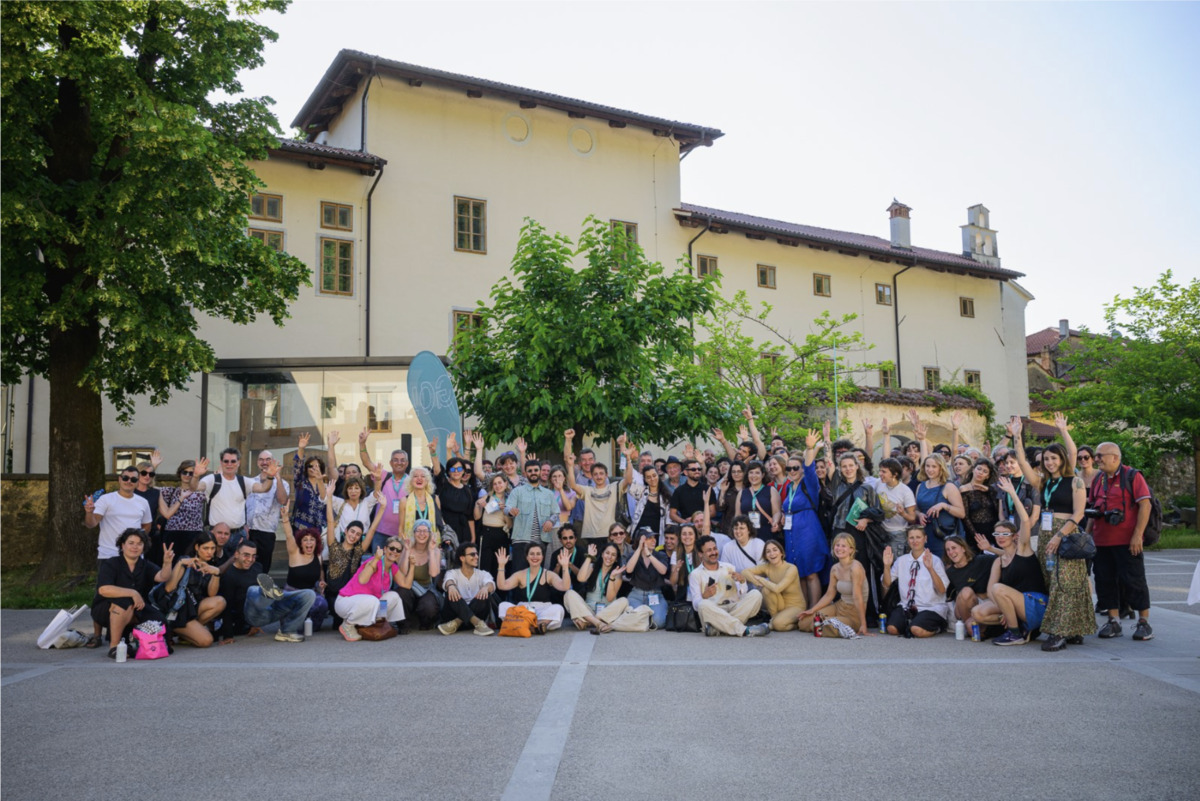
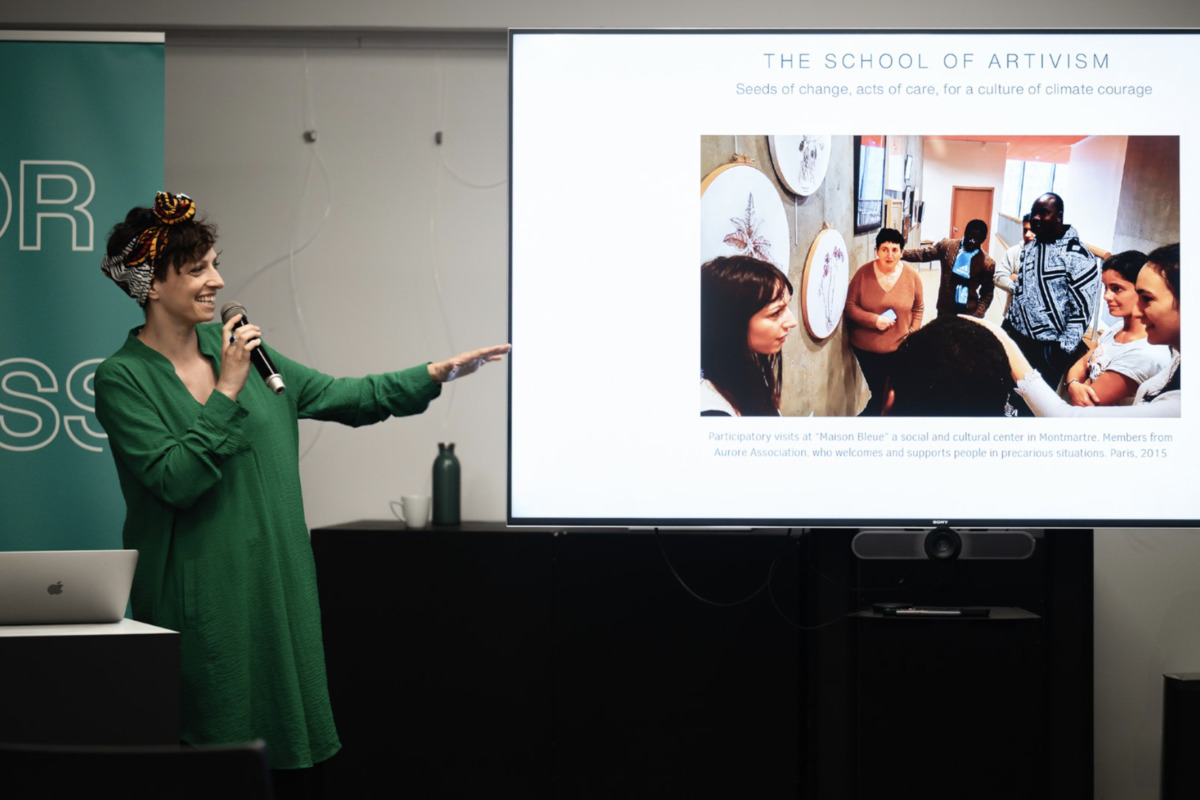
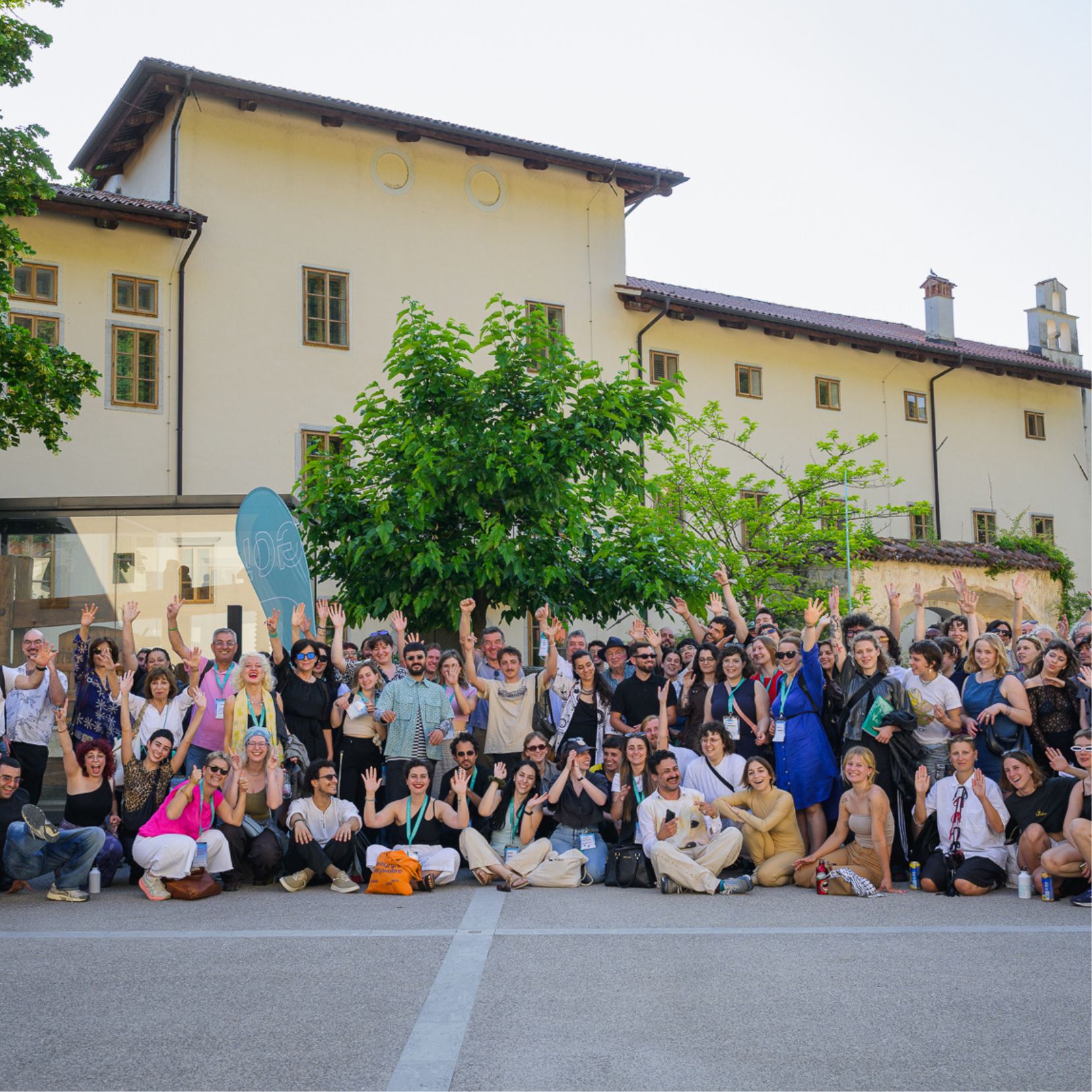
An Open Call for Artivists was launched at the School of Artivism kick-off event, held in Nova Gorica during the opening days of Mediterranea 20 – Young Artists Biennale from Europe and the Mediterranean (30 May – 2 June 2025), organised within the framework of GO! 2025 European Capital of Culture. The event gathered all the participating artists and professionals from the cultural sector, and the two curators attended in person to present the School, its approach and its programme to the audience. The call received 56 applications from artists in 15 countries, and 20 were selected to take part.
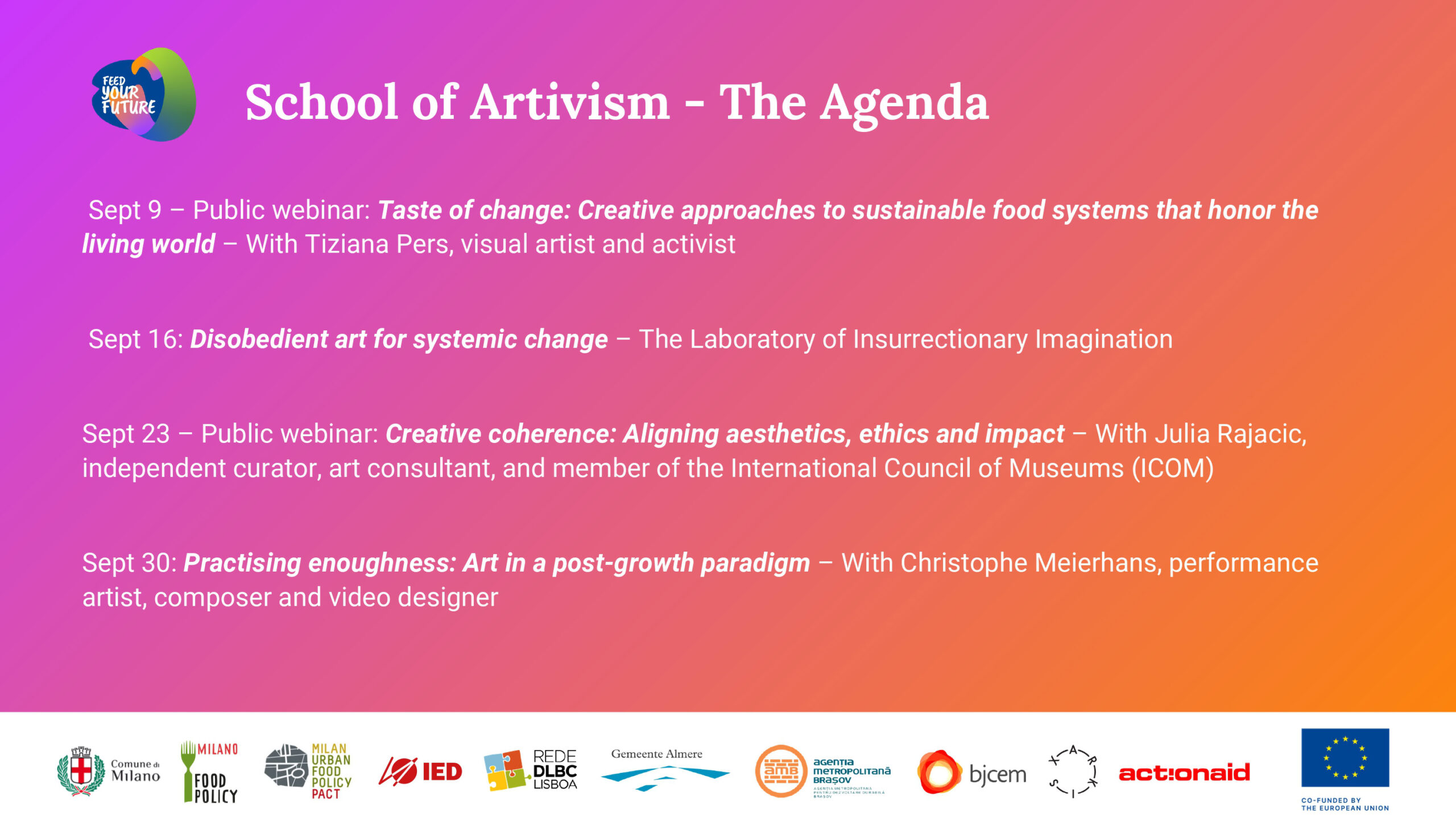
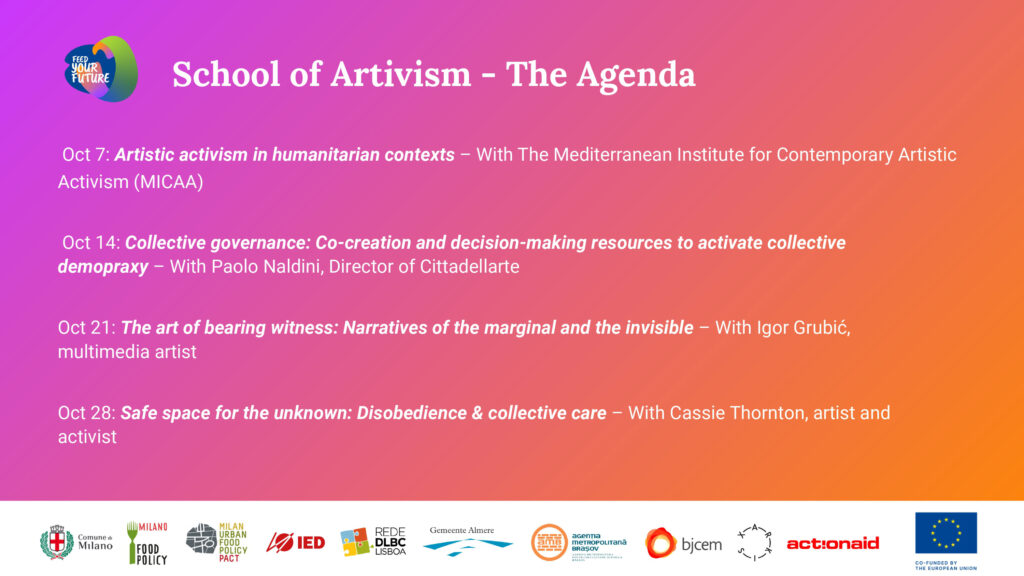
The School of Artivism brought together guest artists, thinkers, and activist practitioners through a programme of eight online sessions heldbetween September and October 2025.
Throughout the sessions, participants explored themes such as sustainable food systems, systemic change, post-growth practices, humanitarian activism, collective governance, marginal narratives, and collective care.
Two of the eight sessions, “Taste of Change: Creative Approaches to Sustainable Food Systems That Honor the Living World”, led by Tiziana Pers, and “Creative Coherence: Aligning Aesthetics, Ethics and Impact”, led by Julia Rajacic, were open to the public. Together, they welcomed approximately 100 participants.
Building a community of Artivists
The School of Artivism became a collaborative space for reimagining and co-creating new approaches through art, care, and social engagement.
Conceived as a practice-based laboratory, it connected artists, thinkers, and activists around shared questions and practices.
The initiative fostered the creation of a community of care, imagination, and empowerment, encouraging participants to maintain connections and continue sharing ideas even after the programme ended.
During the School, participants examined how art can move beyond awareness towards real systemic change, exploring decolonising ecology to understand power, extractive narratives, and environmental justice. The programme then focused on ecologies of coexistence, highlighting interdependence and antispeciesist perspectives, and introduced tools for collective governance, co-creation, and shared decision-making. Further modules encouraged artists to embrace post-growth approaches, adopting non-extractive, sustainable creative methods.
The school also addressed art as social responsibility, exploring how to design and sustain impact. The programme concluded with a co-creative reflection session, allowing participants to consolidate their learning and imagine future pathways for long-term, socially engaged art practices.
As a result, a small group of artivists has continued to meet online once a month in a self-organised way, demonstrating how the relationships built through the School of Artivism can extend beyond the duration of the project.